
Omnichannel Customer Service: Integrating AI for ISPs
Discover how to unify WhatsApp, chat, and phone with an AI agent. Elevate your omnichannel customer service and streamline your ISP's customer journey.
- Omnichannel Customer Service
- Channel Integration
- ISP Management
- WhatsApp Business API
- Customer Journey

The Reality of Fragmented Support
If you run a regional ISP, you probably know the chaos of a fragmented support desk. One customer sends a message on WhatsApp, another calls the main phone line, and a third opens a ticket via your website chat. Upgrading to a true omnichannel customer service operation is no longer a luxury—it is essential for survival.
Without proper integration, your team is left scrambling between different screens. The result? Customers have to repeat their CPF, address, and problem every time they switch channels. This friction damages the customer journey and eats up hours of your team's productivity.
But there is a smarter way. By deploying an AI-powered strategy, you can unify all these touchpoints. The secret lies in using a centralized AI that maintains context, regardless of where the customer reaches out.
The Hidden Costs of Disconnected Channels
For many small and medium-sized ISPs, rapid growth brings an unexpected challenge: communication chaos. When your provider was small, a single WhatsApp Web instance might have been enough. But as you scale, adding more channels without a centralized channel management strategy creates costly inefficiencies.
First, there is the issue of redundant work. When a subscriber reports a regional outage via website chat, and another family member calls the phone line, your team might unknowingly create duplicate tickets. This wastes valuable technical resources and confuses your field technicians.
Second, the lack of a unified history increases your churn rate. Customers expect instant, personalized recognition. If they have to authenticate themselves and explain their router issue three times across different platforms, their frustration peaks. An omnichannel center powered by AI directly combats these hidden costs by creating a single source of truth for every interaction.
What is a True Omnichannel Center?
Many ISPs confuse "multichannel" with "omnichannel". Being multichannel simply means you offer support on multiple platforms. However, if these platforms do not communicate with each other, you are just creating isolated data silos.
An integrated omnichannel center connects all these dots. It ensures that the customer's history flows seamlessly from one channel to the next. When a subscriber complains about a slow connection via web chat and then decides to call your support number, the system already knows who they are and what they need.
This level of synergy requires robust channel integration. By placing an AI agent at the center of your operations, it acts as the universal brain connecting every communication point. And the best part? You can adding AI without changing your system, as modern agents plug directly into your existing ERP and billing platforms.
The Architecture of Channel Integration
Building a seamless experience requires a central hub. Instead of your human agents juggling five different browser tabs, the AI acts as the frontline receptionist for every single channel your ISP operates.

Let's break down the core components of this architecture:
- WhatsApp Business API: This is the backbone of modern ISP communication. Unlike the standard WhatsApp Web, the WhatsApp Business API allows your AI to handle thousands of simultaneous conversations securely and enables proactive automated messaging.
- Voice and Telephony: By integrating voice channels, the AI can answer phone calls, recognize the caller's ID, and even transcribe the request into text for your team.
- Website Webchat: A widget on your site that feeds directly into the same central AI brain, capturing leads and supporting existing clients.
Because the AI is connected to your ISP's database, it can perform technical diagnostics or issue duplicate boletos instantly, resolving up to 70% of ISP tickets automatically before a human ever needs to intervene.
Maintaining Context Across the Customer Journey
The biggest frustration for any telecom subscriber is having to explain their problem multiple times. A well-designed multichannel agent eliminates this friction by maintaining a unified memory of the entire relationship.
Imagine this scenario: A customer sends a message on WhatsApp stating their router is blinking red. The AI runs a quick API test, confirms a signal drop, and creates a technical support ticket. Ten minutes later, the anxious customer calls your support number.
Instead of a generic "Press 1 for support" menu, the voice AI answers: "Hi John, I see we just opened a ticket for your connection issue. Are you calling to get an update on this?"
This creates a "wow" moment. It proves to your subscriber that your ISP is professional, organized, and truly values their time. This level of personalization is the ultimate goal of effective channel management.
Centralized Routing and Channel Management
Even the smartest AI cannot solve 100% of problems. When a complex issue arises, the system must hand the conversation over to a human operator. This is where centralized routing shines.
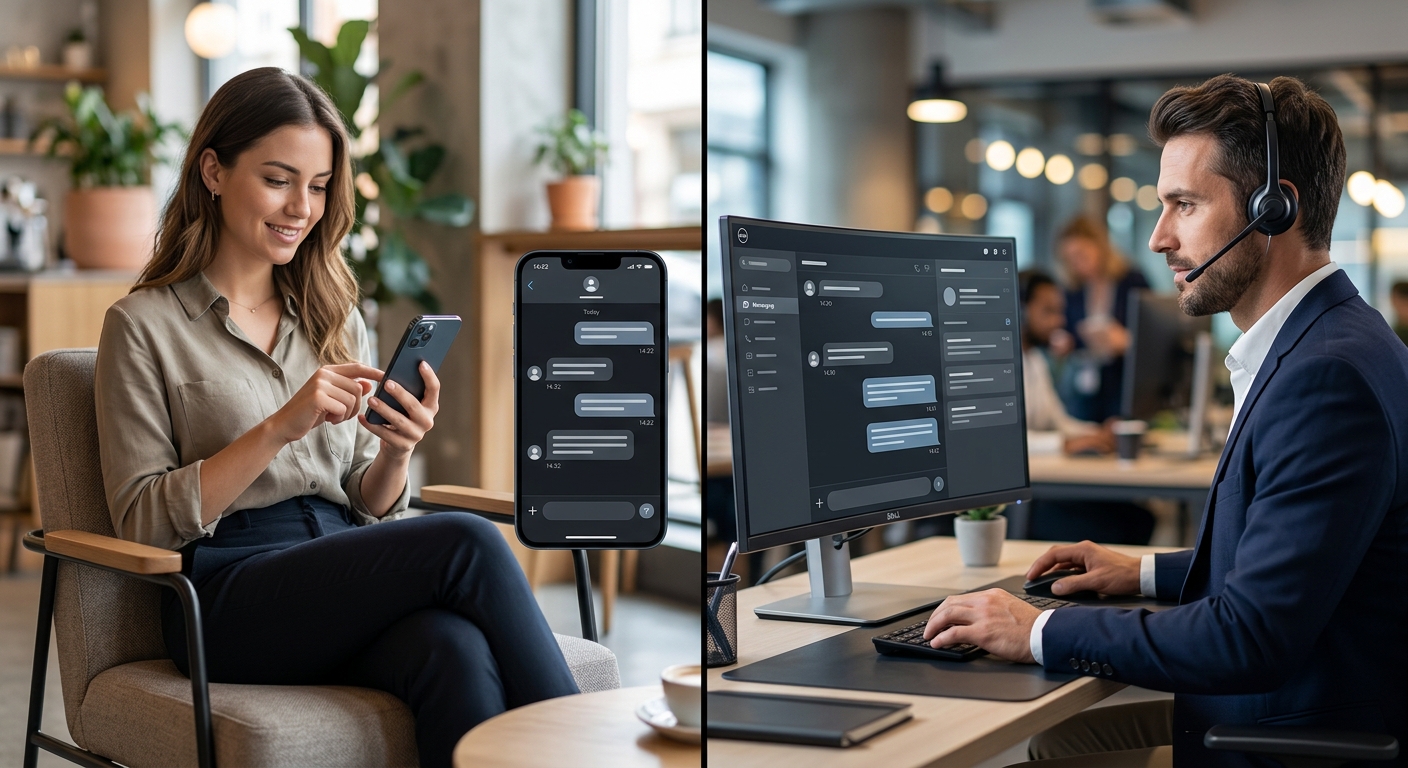
With an integrated setup, the transition is completely invisible to the user. The AI transfers the chat or call directly to the right department—whether it is tier 2 technical support or the financial team.
More importantly, the human agent receives a complete dashboard containing the entire interaction history. They can see the initial WhatsApp messages, the results of the automated connection tests, and the customer's billing status all on one screen.
No more asking for CPF numbers. No more starting from scratch. Your team can jump straight into problem-solving, drastically reducing your Average Handling Time (AHT) and boosting customer satisfaction.
Step-by-Step: Deploying Your Multichannel Agent
Transitioning to an AI-driven omnichannel setup might sound complex, but for regional ISPs, it is a straightforward process when done right. Here is how you can start:
- Upgrade to the Official API: Move away from shared smartphones. The official API is essential for centralized control, automation, and Meta compliance.
- Unify Your Inboxes: Connect your web chat, social media DMs, and phone lines into a single communication platform.
- Integrate Your ISP Software: Link the AI to your ERP (like IXC, Radius, or MkAuth) so it can pull real-time data on contracts, invoices, and connection statuses.
- Define Routing Rules: Establish clear protocols for when the AI should escalate a ticket to a human agent based on keywords or technical test results.
By following these steps, you transform your support desk from a reactive call center into a proactive customer experience hub. This is how smart ISPs turn their service quality into their ultimate competitive advantage.
Conclusion: Elevate Your ISP's Support Experience
Integrating an AI agent into your omnichannel customer service is no longer just a futuristic concept—it is a practical necessity for growing ISPs. By breaking down the barriers between WhatsApp, website chat, and phone calls, you create a frictionless experience that delights subscribers and empowers your team.
The key is prioritizing channel integration and choosing an AI solution that understands the specific needs of telecom providers. When your systems communicate perfectly, your human agents spend less time asking for account details and more time solving real problems.
Do not let fragmented communication hold your provider back. Embrace the power of a centralized multichannel agent and turn your customer service into an engine for retention and sustainable growth.
Frequently Asked Questions
What is the main difference between multichannel and omnichannel customer service?
Multichannel means you offer support on various platforms (like WhatsApp, email, and phone), but they operate independently. Omnichannel customer service integrates all these platforms, allowing the customer's history and context to seamlessly transition between them without losing data or context.
Do I need a new phone number to use the WhatsApp Business API?
No, you do not. You can migrate your existing ISP support number to the WhatsApp Business API. Once migrated, your AI agent can manage thousands of conversations simultaneously on that exact same number, ensuring your customers do not need to update their contacts.
Will the multichannel agent replace my human support team?
Not at all. The goal of an AI agent is to handle repetitive tasks—like issuing boletos, checking connection statuses, and unlocking trust connections. This frees up your human agents to handle complex technical issues and focus on relationship-building and retention strategies.
How does the AI maintain the customer journey across voice and text?
The AI connects to a centralized database. If a customer chats on WhatsApp and later calls via phone, the AI uses their phone number or CPF to pull up the active ticket. It then continues the conversation exactly where it left off, ensuring a frictionless customer journey.