
Service Order Automation: AI & ERP Integration for ISPs
Discover how service order automation and an AI customer service agent can streamline ticket opening, integrate your ERP, and optimize your ISP operations.
- Service Order Automation
- ISP Automation
- ERP Integration
- AI Customer Service
- Telecom Efficiency

The Hidden Cost of Manual Service Orders
Every time a customer loses their internet connection, the clock starts ticking. For most regional ISPs, the ticket opening process is a massive manual bottleneck. Attendants juggle multiple WhatsApp chats, manually check the ERP, and try to calm down frustrated users.
This manual routine leads to delayed responses and inevitable human errors. When field technicians receive incomplete or inaccurate data, they waste precious time on the road. This lack of process automation drains your profit margins and damages your brand reputation.
But what if your system could handle the heavy lifting? By implementing robust service order automation, you eliminate the friction between the customer's initial complaint and the technician's actual dispatch. Let's explore how AI is transforming this workflow.
How an AI Customer Service Agent Changes the Game
An AI customer service agent doesn't just answer frequently asked questions; it acts as a highly efficient digital dispatcher. When a client reports an outage, the AI instantly runs a preliminary diagnostic without any human intervention.
It asks the right questions, checks the connection status via API, and verifies if there is a known mass outage in the region. If a physical repair or specific technical intervention is truly needed, the AI moves straight to creating a service order.
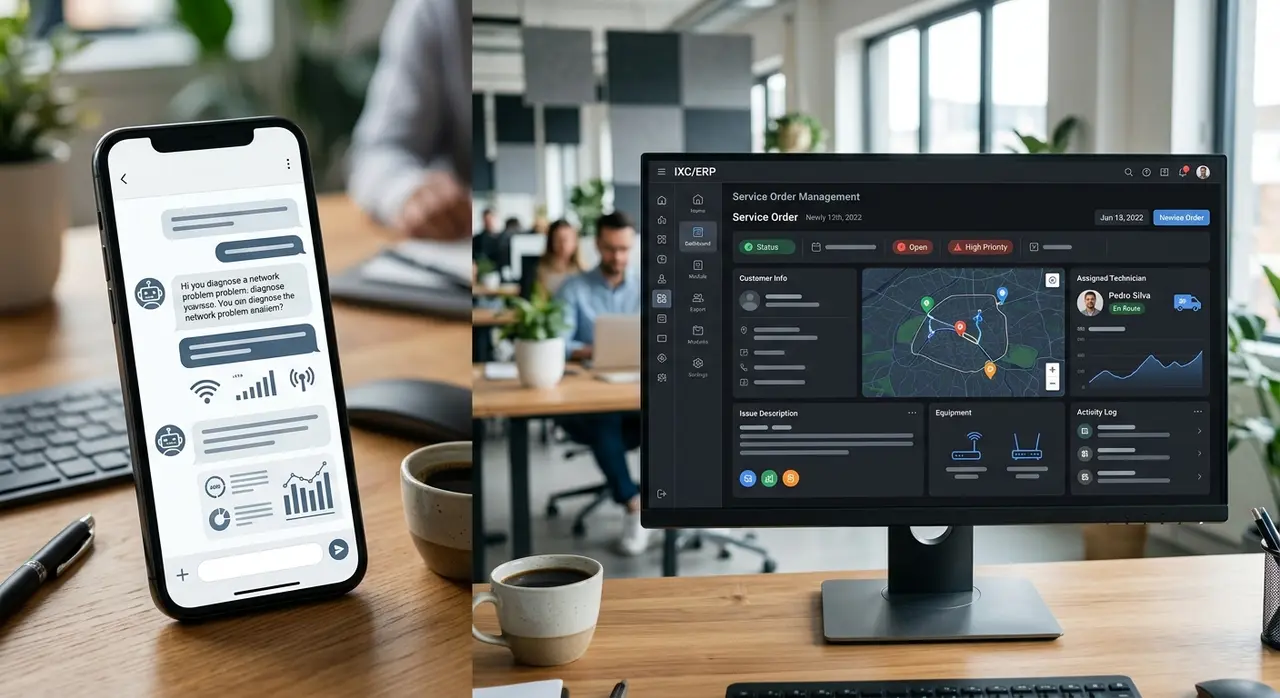
This means your human support team is freed from repetitive triage. They can focus on complex cases, while the AI handles the high volume of routine technical requests. The result is a faster, leaner, and more scalable operation.
Deep Dive: The Anatomy of System Integration
For an AI to open a service order effectively, it needs to talk to your management software. This is where seamless system integration comes into play. You cannot rely on isolated tools if you want true automation.
Many ISPs struggle because their chatbot cannot write data into their billing or technical systems. By utilizing automation platforms like a customized n8n ERP workflow, your AI agent can bridge this gap. n8n acts as the middleware, securely passing information from WhatsApp directly into your ERP.
For instance, if your company uses a popular telecom management system, you can easily connect your ERP to service agents. The AI authenticates the user, gathers the MAC address or CPF, and triggers an API call to IXC Provedor (or your chosen system) to generate the ticket automatically.
The Automated Service Order Flow
Understanding the exact steps of this integration helps visualize the immense time savings. Here is a breakdown of a fully automated service order flow:
- Customer Contact: The user sends a WhatsApp message complaining about slow internet.
- AI Triage: The AI identifies the customer via their phone number and checks their financial status to rule out blocks due to unpaid bills.
- Technical Check: The AI queries the ERP to check the optical power (signal strength) of the customer's ONU.
- Ticket Opening: Finding a poor signal, the AI automatically creates a service order in the system, filling in all technical details and the customer's address.
- Smart Scheduling: The system checks the field team's calendar and offers the customer available time slots right in the chat.
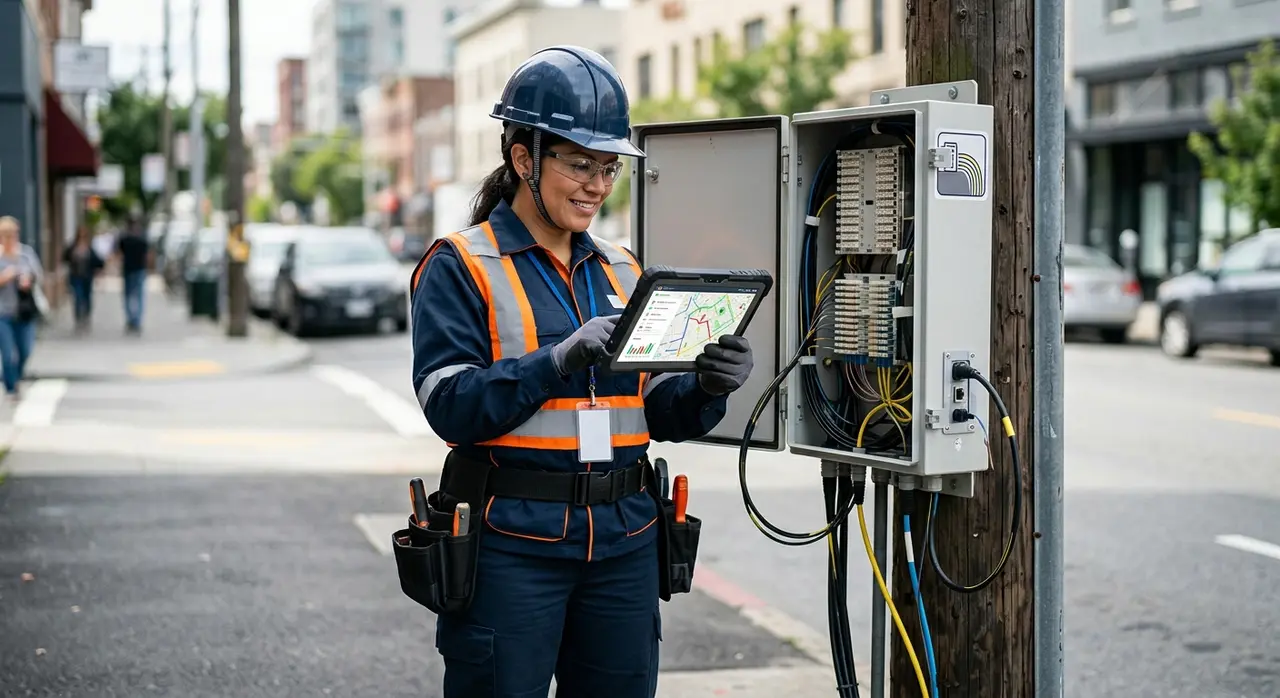
- Technician Dispatch: Once confirmed, the OS is routed to the nearest technician's mobile app.
Manual vs. AI-Automated Operations
To truly grasp the impact of this technology, let's compare the traditional approach with an AI-driven operation. The differences in speed and accuracy are striking.
| Feature | Manual Process | AI-Automated Flow |
|---|---|---|
| Response Time | Minutes to hours, depending on queue. | Instant (Under 3 seconds). |
| Data Accuracy | Prone to typos and missing context. | 100% accurate, pulled from the database. |
| Availability | Limited to business hours. | 24/7/365 continuous operation. |
| Technician Routing | Manual assignment by a dispatcher. | Automatic routing based on region and schedule. |
As the table highlights, relying on human effort for routine data entry is no longer sustainable. To stay competitive, you must extract value from IXC, SGP & TOPSAPP by leveraging their automation capabilities.
Key Benefits of Process Automation for ISPs
Implementing an automated service order system does more than just speed up chats. It fundamentally changes your cost structure and customer satisfaction levels.
First, it drastically reduces your Average Handling Time (AHT). Customers don't have to wait in a queue just to schedule a visit. The AI resolves the bureaucratic part of the interaction instantly, leaving the customer feeling heard and valued.
Second, it optimizes your field team's routes. Because the AI captures precise coordinates and technical context directly from the ERP, technicians arrive prepared. They know exactly what equipment might be failing before they even knock on the door.
Conclusion
Service order automation is no longer a luxury reserved for telecom giants; it is a necessity for regional ISPs aiming to scale. By letting an AI customer service agent handle the triage and ticket opening, you eliminate bottlenecks.
Through smart system integration using tools like n8n and robust platforms like IXC Provedor, your data flows seamlessly from the customer's WhatsApp straight to the technician's hands. Embrace process automation, reduce your operational headaches, and deliver the modern, instant support your subscribers expect.
Frequently Asked Questions
Can AI really diagnose internet issues before opening a ticket?
Yes. By integrating with your ERP and network monitoring tools via APIs, the AI can check the customer's connection status, optical signal strength, and verify mass outages before deciding if a field visit is actually necessary.
How hard is the system integration with my current ERP?
It is easier than you might think. Modern automation platforms and middleware (like n8n) use REST APIs to connect seamlessly with popular ISP software, allowing data to flow securely without requiring you to change your entire infrastructure.
Will an AI customer service agent replace my human support team?
No, it will empower them. The AI handles the high volume of repetitive tasks—like checking connection status and scheduling visits—allowing your human agents to focus on complex technical troubleshooting, retention, and relationship building.
What happens if the customer provides the wrong address or details?
Because the AI is integrated directly with your ERP, it doesn't rely on the customer typing their address. It identifies the customer via their phone number or CPF, pulls the registered address automatically from the database, and simply asks the user to confirm it.