
How AI Reads Pet History to Answer Owners Automatically
Discover how AI integrates with your vet clinic's software to read pet medical histories, answer owner questions instantly, and prevent client churn.
- Veterinary AI
- Clinic Automation
- Botpress WhatsApp
- Customer Retention
- Pet Shop Management
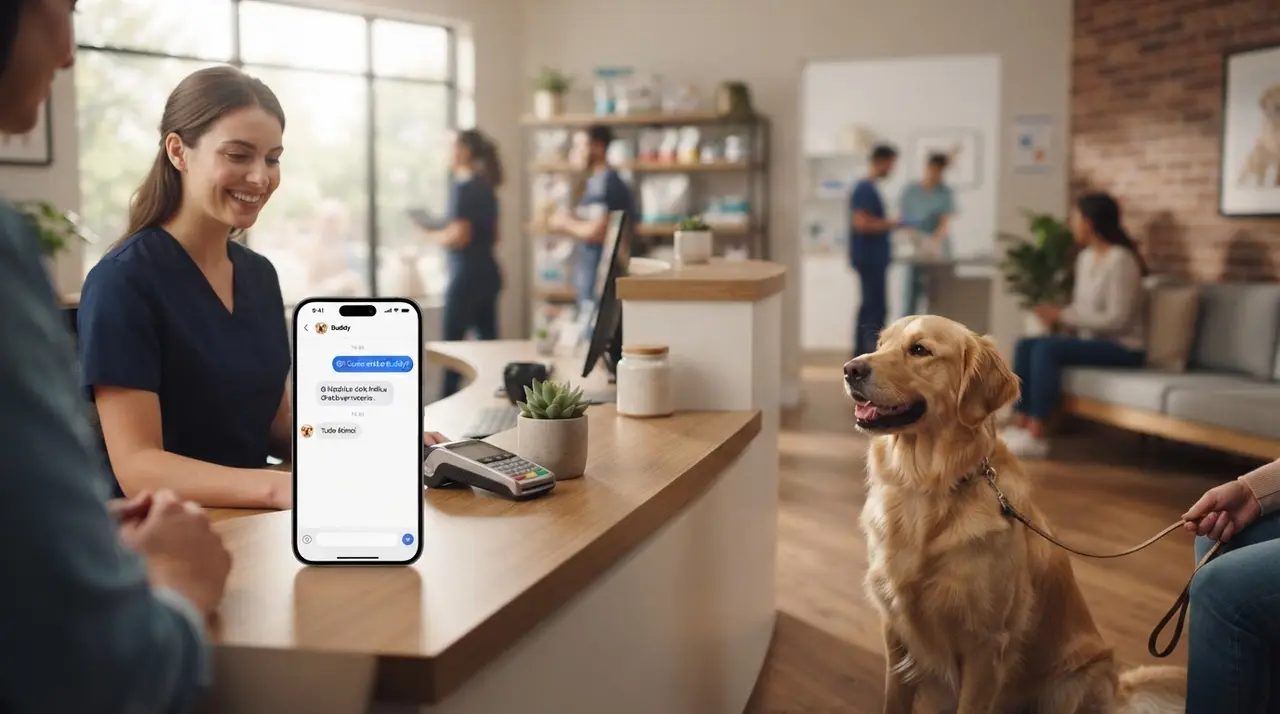
The Endless Cycle of Routine Clinic Questions
If you run a veterinary clinic or a pet shop, you know the daily struggle. The phone rings constantly, and the WhatsApp inbox is overflowing. What are the clients asking? Most of the time, it is not an emergency. They want to know when Bella's next rabies vaccine is due, or what specific brand of renal food the vet prescribed for Max last month.
These questions are crucial for the pet's health, but answering them manually is a massive drain on your staff. Your receptionists are forced to stop what they are doing, ask for the owner's details, open the practice management software, search for the pet's file, read through the history, and type out a response.
This manual process takes minutes per conversation. Multiply that by dozens of inquiries a day, and your team is losing hours of productive time. Worse, if your front desk is busy and the reply takes too long, the pet owner (tutor) gets frustrated. In today's fast-paced world, slow responses are a direct path to losing clients.
This is exactly where AI in customer service changes the rules of the game. By integrating smart technology into your communication channels, you can automate these routine interactions completely. An AI agent can read the pet's history and answer the owner instantly, freeing up your team to focus on the animals in front of them.
How the AI Brain Works Behind the Scenes
You might be wondering how a machine can safely and accurately read a medical chart. It is not magic; it is a highly structured process powered by Natural Language Processing (NLP) and API integrations. When you use tools like Botpress WhatsApp, the AI acts as a digital bridge between your messaging app and your clinic's database.
The AI does not just blindly guess answers. It follows strict protocols to ensure the information provided is 100% accurate based on the veterinarian's notes. It works as a 24/7 virtual assistant that never sleeps, never gets tired, and never misreads a date.
Let's break down exactly how this technology interprets a tutor's message, consults the medical record, and formulates a helpful response without human intervention.

The Question-Consultation-Response Cycle
The core of this automation relies on a three-step cycle. Every time a client sends a message, the AI goes through this exact workflow in a matter of seconds.
1. Interpreting the Question (The Intake)
When a tutor sends a message like, "Hi, I need to know if Luna is due for her flea medication," the AI goes to work. First, it identifies the user based on their phone number. Then, it uses NLP to understand the intent of the message. It recognizes that the subject is "flea medication" and the pet's name is "Luna".
If the owner has multiple pets, the AI is smart enough to ask for clarification. It might reply, "I see you have two dogs, Luna and Charlie. Are you asking about Luna's medication?" This ensures absolute accuracy before proceeding.
2. Consulting the Medical Record (The Search)
Once the intent and the pet are confirmed, the AI triggers a search in your clinic's software. Through secure API connections, it looks up Luna's specific electronic health record (EHR). It scans the history for recent prescriptions, vaccine logs, and treatment plans.
It finds the entry from the last visit: "Administered Bravecto on October 1st. Next dose due January 1st." The AI extracts this specific data point, ensuring it only pulls information relevant to the tutor's question.
3. Formulating the Response (The Delivery)
Finally, the AI translates that raw database information into a friendly, natural-sounding message. It does not just spit out computer code. It crafts a response like, "Hi there! Luna had her last Bravecto on October 1st. Her next dose is due on January 1st. Would you like me to reserve a box for you to pick up this week?"
This cycle happens in less than three seconds. The tutor gets an instant, accurate answer, and your receptionist didn't have to lift a finger.
Comparing the Manual vs. AI Approach
To truly understand the impact, it helps to see the two methods side by side. When you implement clinic automation, the difference in operational efficiency is staggering.
| Feature | Manual Process (Receptionist) | AI Automation (Botpress WhatsApp) |
|---|---|---|
| Response Time | 15 to 45 minutes (depending on clinic traffic) | Instant (Under 3 seconds) |
| Availability | Only during business hours | 24/7, including weekends and holidays |
| Accuracy | Prone to human error during busy shifts | 100% accurate based on database records |
| Cost per Interaction | High (consumes paid staff time) | Fractions of a cent |
As you can see, the AI approach not only saves time but fundamentally upgrades the level of service you provide. This is one of the most powerful benefits of using AI in a modern veterinary practice.
Setting Boundaries: No Clinical Advice Without a Vet
One of the biggest concerns clinic owners have is safety. "What if the AI gives the wrong medical advice?" The answer is simple: the AI is strictly programmed never to give medical advice.
The system is designed to handle administrative data, not clinical diagnostics. It can read a record and tell a tutor what was prescribed in the past, but it cannot suggest a new treatment. If a tutor messages, "My dog is vomiting and lethargic, what should I give him?", the AI recognizes the medical emergency intent.
In these cases, the AI immediately stops the automated cycle. It replies with a predefined safety message: "I am a virtual assistant and cannot provide medical diagnoses. Please bring your pet to the clinic immediately or hold on while I transfer you to our human triage team."
- Historical Data Only: AI only repeats what the vet has already written and approved.
- Emergency Triggers: Keywords like "vomiting," "bleeding," or "seizure" instantly route the chat to a human.
- Prescription Limits: AI can remind about existing refills but cannot authorize new controlled medications.
By setting these firm boundaries, you protect your patients, your license, and your clinic's reputation while still automating the harmless, routine queries.
Real-Time Updates and Seamless Handoffs
For this system to work flawlessly, it relies on real-time data synchronization. If a vet updates a pet's chart in the exam room, the AI knows about it instantly.
Imagine a scenario where a tutor leaves the clinic and immediately texts your WhatsApp to ask about the post-surgery care instructions they forgot. Because the vet just saved those notes in the EHR, the AI can instantly retrieve and send the exact post-op care sheet.
Furthermore, when a conversation requires a human touch—like discussing a complex treatment plan or handling a complaint—the AI performs a seamless handoff. It transfers the chat to a live staff member, passing along the entire conversation history so the receptionist doesn't have to ask the client to repeat themselves.
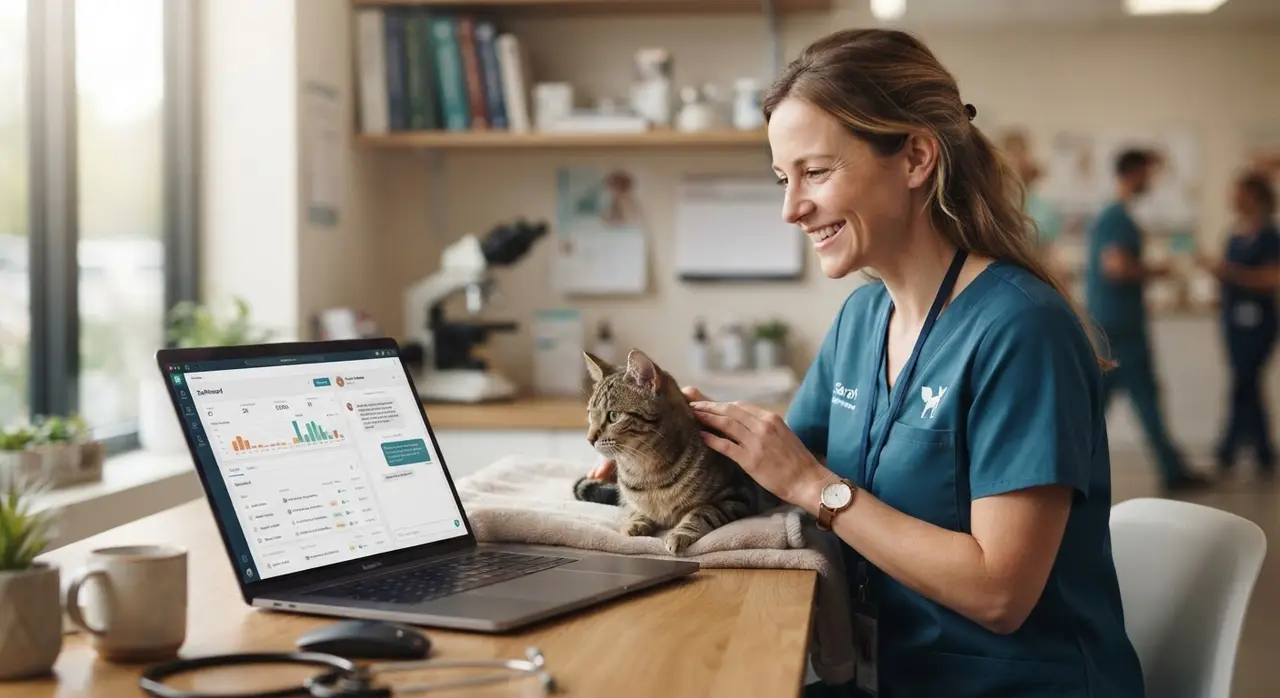
The Ultimate Churn Prevention Strategy
In the veterinary and pet care industry, client retention is everything. Acquiring a new client costs significantly more than keeping an existing one. This is why churn prevention must be a top priority for your management strategy.
Why do clients leave? Very rarely is it because of the veterinarian's medical skills. Most churn happens due to poor customer service: long wait times on the phone, unread WhatsApp messages, or feeling like the clinic doesn't care about their time.
When a tutor can message your clinic at 9 PM on a Sunday to check their cat's vaccine status and get an instant, polite, and accurate reply, their loyalty skyrockets. They feel supported and valued. They trust that your clinic is modern, organized, and responsive.
Preparing Your Clinic for AI Adoption
Implementing an AI that reads pet histories isn't just about plugging in a software tool; it requires a bit of operational housekeeping. The AI is only as good as the data it reads. If your clinic's records are messy or incomplete, the AI will struggle to provide good answers.
To get ready, start by standardizing how your veterinarians and techs input data. Ensure that vaccine dates, medication names, and next-visit reminders are placed in their designated fields within your software, rather than buried in long, unstructured text notes.
Next, explore the use cases of AI in customer service to identify which repetitive questions take up the most time in your specific clinic. Is it grooming appointments? Vaccine records? Post-op check-ins? Map these out so the AI can be trained to handle your highest-volume requests first.
Conclusion
Embracing AI to read pet histories and answer tutors automatically is no longer science fiction; it is an accessible, necessary upgrade for modern veterinary clinics and pet shops. By reducing the operational burden on your front desk, you empower your staff to focus on in-person care and complex tasks.
More importantly, you provide pet owners with the instant, accurate communication they crave. This seamless experience builds trust, drives loyalty, and serves as your strongest defense against client churn. The future of veterinary customer service is automated, intelligent, and highly personalized.
Frequently Asked Questions
Can the AI handle multiple pets under the same owner?
Yes. When a tutor messages, the AI checks the database linked to their phone number. If it sees multiple pets, it will ask the owner to specify which pet they are asking about before fetching the medical history.
Is it safe to connect my clinic's database to an AI on WhatsApp?
Absolutely. Professional AI integrations use secure, encrypted APIs to communicate between your database and WhatsApp. The AI only accesses the specific data points required to answer the question and does not store sensitive medical data improperly.
What happens if the AI doesn't understand the tutor's question?
If the AI encounters a question it is not programmed to answer, or if the tutor's phrasing is too confusing, it automatically transfers the conversation to a human receptionist. It also provides the receptionist with the chat history for context.
Can the AI schedule appointments based on the medical history?
Yes. If the AI reads that a pet is due for a rabies vaccine, it can proactively ask the tutor if they would like to schedule an appointment. It can then check your calendar system and book the slot automatically.