
7 AI Ways to Boost Custom Products Output & Cut Errors
Discover 7 ways AI boosts custom products production and reduces errors. Learn how Bling API and ContaAzul API integrations automate your factory workflow.
- Custom Products
- AI in Manufacturing
- Bling API
- ContaAzul API
- Production Automation
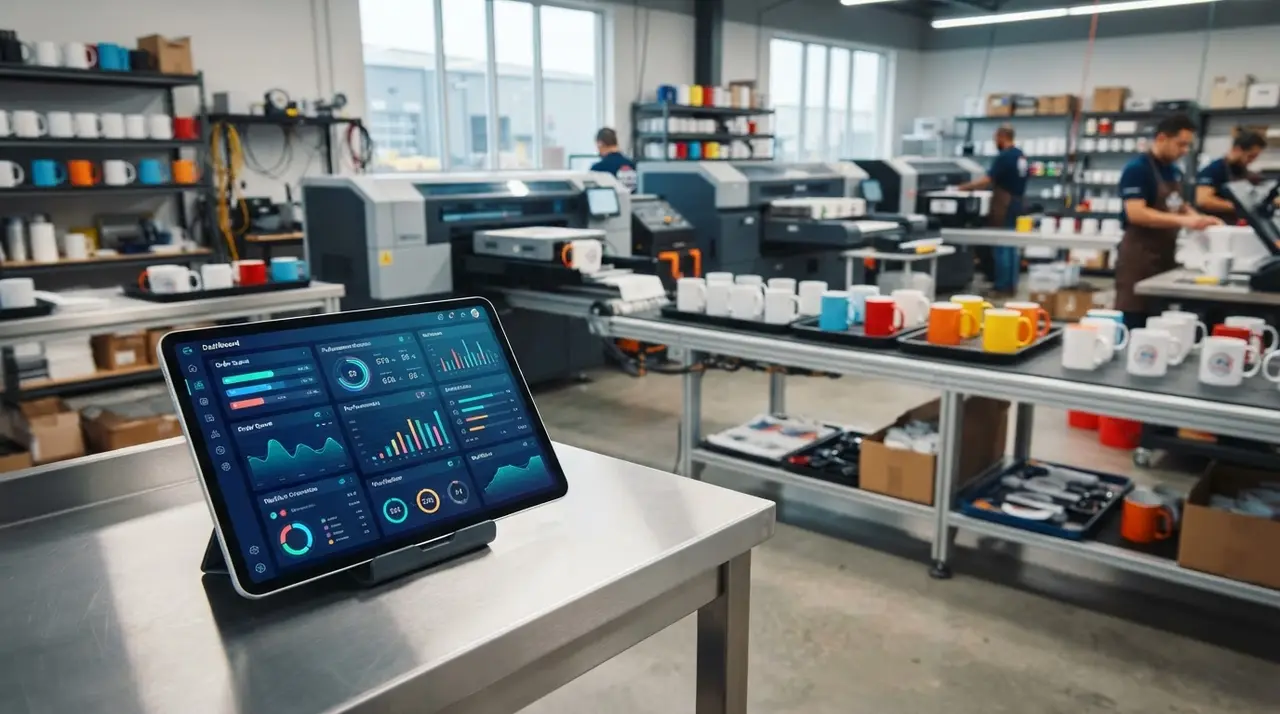
Artificial intelligence for custom products directly increases factory output and reduces costly manufacturing errors by automating the entire workflow. By integrating intelligent tools and systems like the Bling API and ContaAzul API, custom gift factories can seamlessly connect sales data to production lines. This eliminates the manual bottlenecks that traditionally slow down personalized manufacturing, allowing small and medium-sized businesses to scale without proportionally increasing their headcount.
For factory owners and production managers, the daily struggle involves managing hundreds of micro-decisions. Every custom mug, promotional t-shirt, or engraved corporate gift requires specific attention to detail. When human operators are forced to handle repetitive administrative tasks, mistakes happen. Artwork gets printed in the wrong color, sizes are misread, and inventory runs out unexpectedly.
By deploying AI across your operations, you transform your factory into a highly efficient, data-driven environment. Below, we explore seven concrete ways artificial intelligence eliminates guesswork, speeds up production, and ensures more orders are delivered on time with zero rework.
AI Artwork Quoting Replaces Manual Estimates
AI instantly calculates accurate quotes based on artwork complexity and material requirements. Traditionally, a commercial manager manually reviews every client image, guesses the ink usage, and calculates labor time. This manual task takes hours, creates a bottleneck in sales, and often leads to underpricing complex jobs.
When AI steps in, it scans the uploaded design, measures color density, and outputs a precise cost in seconds. Think of it like a smart scale at a grocery store that instantly knows the exact weight and price of your produce. Your commercial team saves countless hours each week, allowing them to focus on closing larger B2B deals.
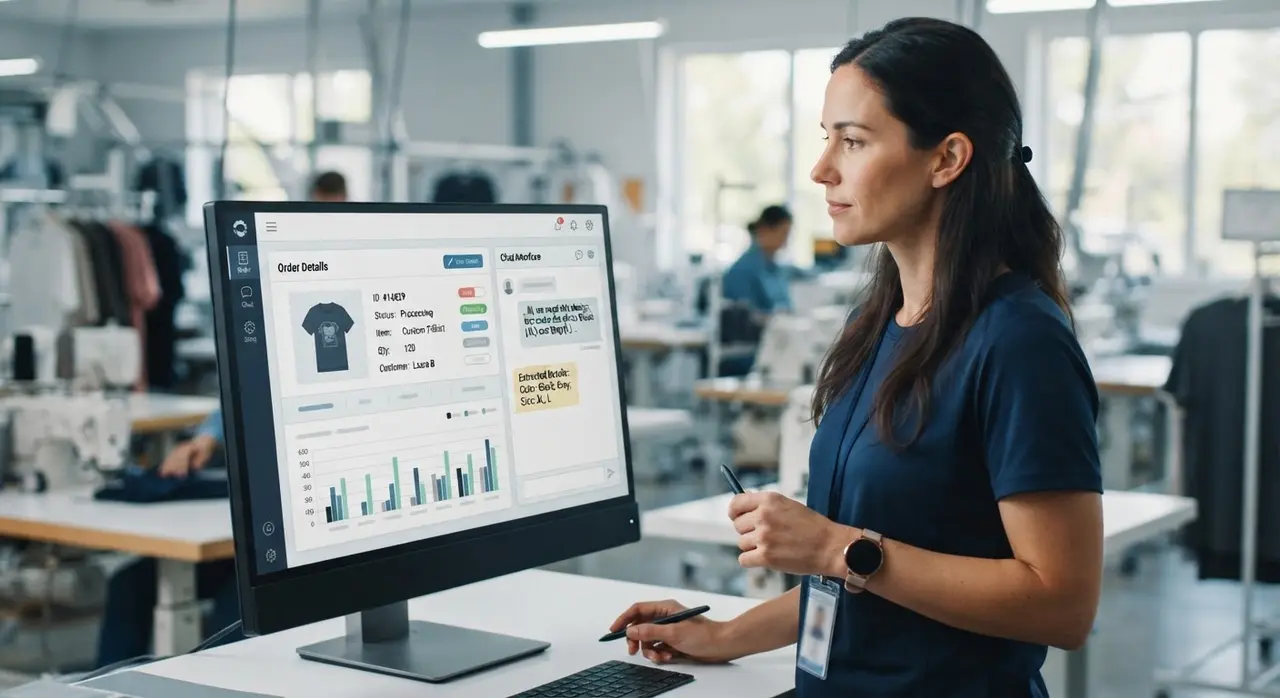
More importantly, you stop losing money on complex prints that were quoted too cheaply. The AI evaluates vector paths and pixel counts, ensuring that highly intricate designs are priced correctly. This measurable gain means higher profit margins and a standardized pricing model that clients can trust.
Structured Briefings Eliminate Missing Information
AI chatbots collect perfect customization details before any production order is created. The current manual process involves endless back-and-forth emails or WhatsApp messages to confirm sizes, colors, and text placements. Clients often forget crucial details, leading to stalled orders and frustrated production teams.
Using an intelligent assistant, the system asks dynamic, structured questions based on the exact item chosen. If a client selects a custom canvas tote bag, the AI automatically requests specific details. This ensures the production floor receives complete, error-free instructions from the start.
- Exact Dimensions: Ensures the logo fits the printable area perfectly.
- Color Profiles: Confirms if the client needs CMYK or specific Pantone matches.
- Material Preferences: Verifies the substrate, whether ceramic, cotton, or acrylic.
This automated data collection cuts briefing time in half. You can explore various AI use cases to see how conversational agents capture flawless data, ensuring your machines never sit idle waiting for client clarifications.
Automated Layout Approval Speeds Up Client Sign-off
AI manages the layout approval loop to prevent production delays and miscommunications. Currently, designers send PDF proofs via email and wait days for a simple "approved" reply, often losing track of version control in messy email threads.
An AI system automatically routes digital proofs to clients via WhatsApp and tracks their responses in real-time. If the client requests a change, the AI logs it directly into your design team's task board. If the client approves, the AI immediately tags the order as "Ready for Print" in your management software.
This reduces the approval cycle from days to mere hours. Clients appreciate the instant, mobile-friendly interaction, and your factory benefits from a continuous flow of approved jobs ready to hit the machines.
Smart Print Queue Control Optimizes Machine Uptime
AI organizes print queues by material type and delivery deadline to maximize machine efficiency. Factory managers typically schedule jobs manually, often switching materials or inks unnecessarily throughout the day, which causes massive machine downtime and wasted resources.
By deploying AI to control the queue, the system algorithms group similar jobs together. It acts like a highly efficient head chef in a busy restaurant kitchen, ensuring that all orders requiring the same setup are processed simultaneously.
| Process Step | Traditional Manual Method | AI-Assisted Method | Measurable Gain |
|---|---|---|---|
| Quoting | Manual visual estimation | Automated design analysis | Quotes delivered in seconds |
| Briefing | Back-and-forth emails | Structured chatbot flows | Zero missing information |
| Approvals | Lost email threads | Automated WhatsApp tracking | Faster client sign-off |
| Queue Control | Manual scheduling | Algorithmic batch grouping | Higher machine uptime |
The AI prioritizes urgent deliveries while minimizing the physical setup time between batches. As a result, your factory produces more items per shift, and operators spend less time calibrating machines and more time actually printing.
Real-Time Specification Checking Prevents Costly Rework
AI verifies file resolutions and color profiles against production standards before printing begins. Manual checking relies on a pre-press operator opening every single file to check DPI and bleed margins, a tedious task that is highly prone to human error when order volumes spike.
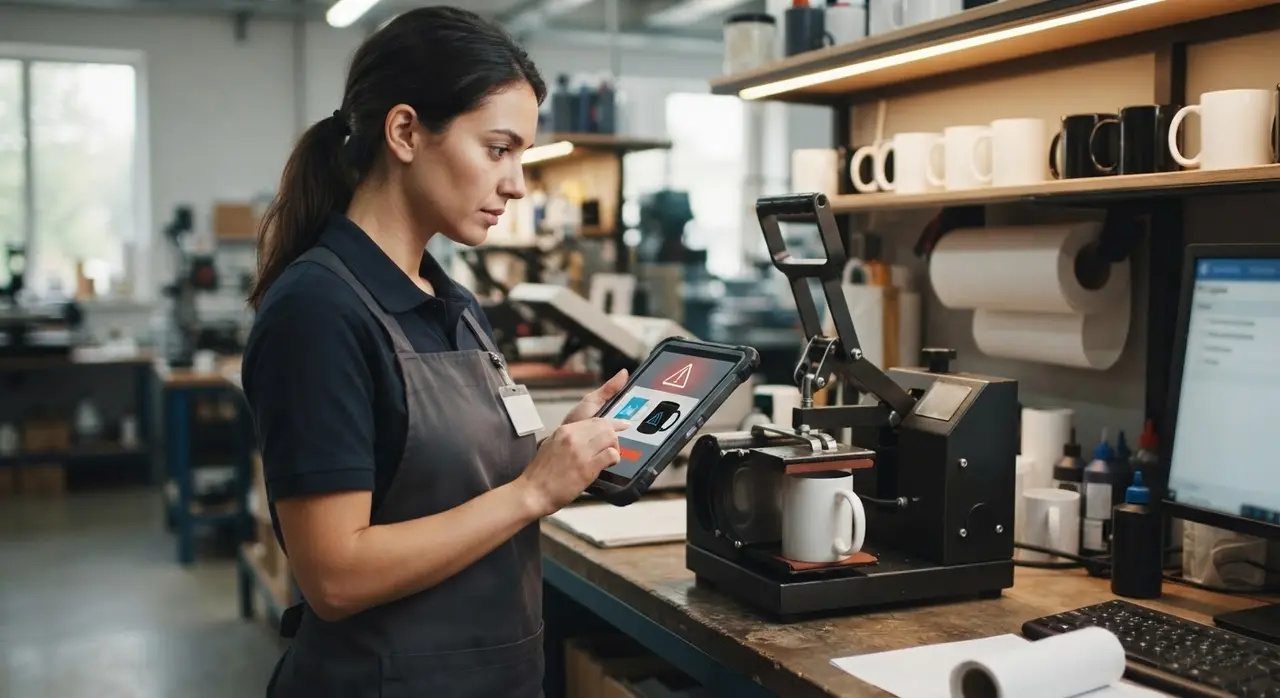
With AI, every uploaded file is automatically pre-flighted the moment it is received. If an image is too low quality to be printed on a large banner, the AI instantly alerts the client to upload a better version. It acts as a digital bouncer, refusing entry to bad data.
This completely eliminates the rework caused by printing pixelated, blurry, or incorrectly sized artwork. Your scrap rates plummet, saving significant money on wasted blank products and expensive printing inks.
Supply Forecasting with Bling API and ContaAzul API
AI predicts inventory needs by analyzing historical sales data through the Bling API and ContaAzul API. Purchasing managers typically look at past spreadsheets and guess how much blank stock or ink to order for the upcoming month, which often leads to overstocking or critical shortages.
By connecting custom AI solutions to your ERP via the Bling API or your financial software via the ContaAzul API, the system identifies seasonal trends and current order volumes. It reads exactly how many blank t-shirts or mugs are left in real-time.
The AI automatically generates purchase alerts or even drafts purchase orders before you run out of essential supplies. This guarantees your production line never stops due to missing inventory, while keeping your cash flow healthy by not over-purchasing.
Automated Order Follow-Up Keeps Clients Informed
AI sends proactive order updates to reduce customer service inquiries and improve client satisfaction. Usually, a sales rep has to manually check the factory floor status, find the client's number, and text them an update, pulling focus away from closing new deals.
An automated AI system reads the production status from your ERP and messages the client at key milestones: "In Production," "Quality Check," and "Ready for Shipping." For clients anxiously waiting for event giveaways or wedding favors, this proactive communication builds immense trust.
This drastically reduces inbound "where is my order" messages. Your commercial team can focus purely on selling, while the AI handles the routine customer care, ensuring a smooth post-purchase experience.
Scaling Production with IAChatbot: A Concrete Example
A mid-sized custom promotional gifts factory was struggling with a 15% rework rate due to poor client briefings and incorrect file formats. By implementing IAChatbot to handle their initial WhatsApp inquiries, they completely structured their briefing process. The AI asked for exact logo files, verified colors, and confirmed quantities upfront, pushing the clean data directly into their ERP.
The result was immediate and highly measurable. Within the first three months, the factory saw a 40% reduction in artwork-related rework. Because the design team no longer had to chase clients for missing details, their overall production capacity increased, allowing them to deliver more orders on time without hiring extra staff.
Frequently asked questions
How does AI help in custom product manufacturing?
AI helps custom product manufacturing by automating repetitive tasks like artwork quoting, client briefings, and production scheduling. This reduces human error, speeds up the approval process, and allows factories to produce more items per shift with the same resources.
Can AI integrate with my current ERP system?
Yes, AI can seamlessly integrate with modern ERP systems using tools like the Bling API and ContaAzul API. This allows the AI to read inventory levels, update order statuses, and synchronize financial data in real-time across your entire factory.
Will AI replace my design and production team?
No, AI is designed to augment your team, not replace them. It handles tedious administrative tasks like checking file resolutions, grouping print queues, and chasing client approvals, freeing your designers and operators to focus on high-quality production and creative work.
How do I start implementing AI in my factory?
The best way to start is by automating your biggest bottleneck, which is usually client communication and order briefings. Implementing an AI chatbot for WhatsApp can instantly structure incoming orders, reduce missing information, and provide an immediate return on investment.