
Add AI to Your Store System Without Replacing Software
Learn how to build an AI layer over your existing building materials store system without changing ERP software. Automate WhatsApp quotes and stock checks.
- Hardware Store Automation
- AI Integration
- ERP Middleware
- WhatsApp AI Agent
- Retail Technology
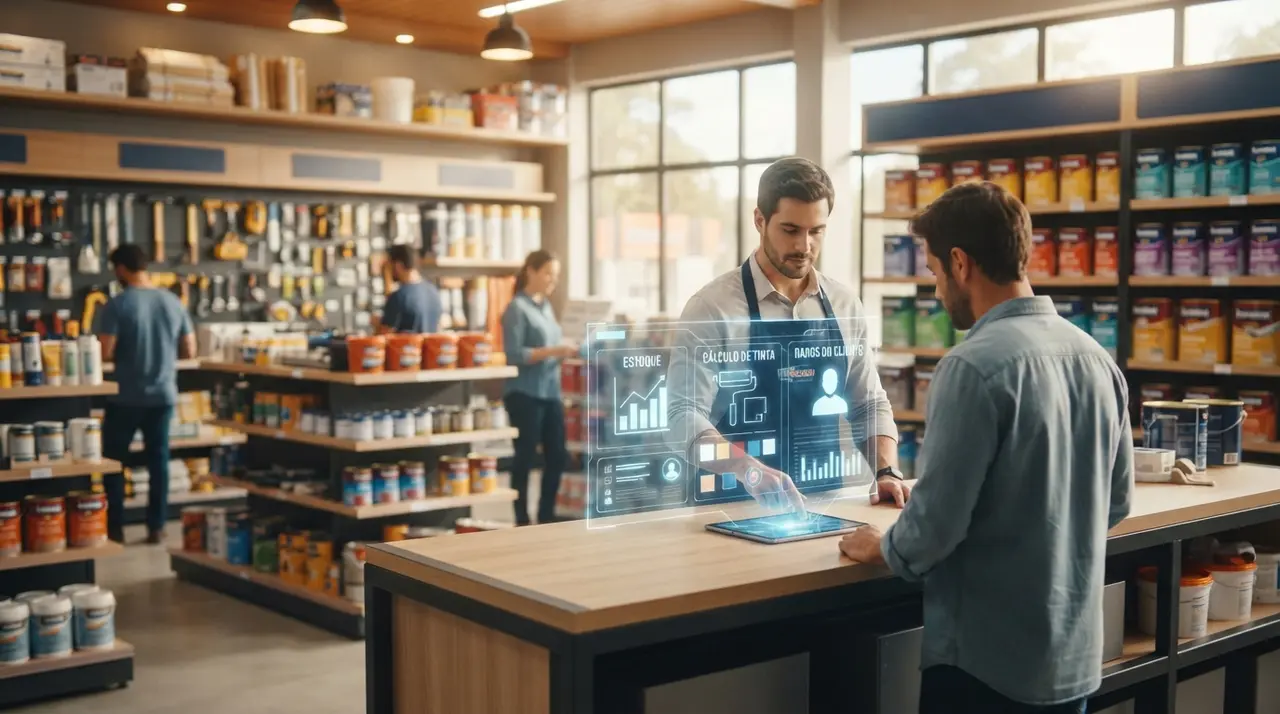
Deploying an artificial intelligence overlay on top of an existing store management system enables automated customer service and instant stock queries without replacing legacy ERP software. This non-invasive architecture uses API integrations and middleware webhooks to allow AI agents to read inventory data and write quote requests directly into your existing sistema para loja de materiais de construção.
Replacing a core management system in a hardware or paint retail business creates immense operational friction, high costs, and staff retraining downtime. By maintaining your current database infrastructure and introducing an intelligent automation layer, independent store owners can modernize customer interactions while preserving financial and inventory workflows.
An AI layer connects to existing ERPs via API webhooks
An AI middleware layer operates as a communication bridge between messaging platforms and your store database through API endpoints and webhooks. This architecture retrieves real-time stock balances and prices without disrupting standard checkout counters or administrative modules.
When a customer sends a message on WhatsApp requesting product availability or pricing, the conversational AI agent processes the request using natural language processing. The agent translates the query into a structured database lookup, queries the ERP database, and returns accurate information instantly.
The standard integration workflow follows three core execution steps:
- Query Capture: The AI receives an unformatted text or voice message from the buyer on WhatsApp or web chat.
- Database Synchronization: The middleware executes a secure read request to check physical inventory, wholesale prices, and promotional discounts.
- Action Execution: The agent generates a formal quotation record inside the store software while providing an immediate itemized reply to the customer.
Incremental implementation reduces operational risk and deployment costs
Starting AI adoption with a single high-volume sales workflow minimizes technical risks and delivers measurable return on investment within weeks. Rather than attempting a full system overhaul, building materials stores achieve faster results by focusing initial automation on repetitive inbound inquiries like inventory availability and price quotes.
Legacy software platforms such as adm sistemas or custom SQL-based store managers often lack modern native messaging capabilities. Installing an external AI layer upgrades these traditional systems into multi-channel automation hubs without requiring expensive database migrations.
| Evaluation Criterion | Full System Replacement (ERP Rip-and-Replace) | AI Middleware Overlay Integration |
|---|---|---|
| Implementation Timeline | 6 to 12 months of configuration and data migration | 2 to 4 weeks for initial channel setup |
| Staff Retraining Required | High; entire workforce must learn new user interface | Zero; counter staff retain their familiar screens |
| Operational Risk | High risk of inventory sync issues and sales downtime | Low; legacy database remains master record |
| Customer Speed to Quote | Dependent on manual sales representative entry | Instant automated responses on WhatsApp 24/7 |

Automating complex technical queries improves store conversion rates
Specialized retail agents calculate technical material parameters automatically during conversations to prevent lost sales opportunities. In paint and construction supply, buyers frequently ask technical calculation questions such as quantos litros de tinta por m2 before placing an order.
Instead of forcing a human seller to manually calculate coverage rates and paint coat requirements, an AI agent trained on product specifications performs technical math instantly. It queries wall dimensions, applies surface absorption formulas, and recommends the exact number of paint cans needed alongside matching rollers and primers.
Key technical tasks suitable for automated calculation include:
- Paint Coverage Estimation: Converting square meters into specific bucket quantities based on manufacturer technical sheets.
- Masonry & Drywall Quantities: Calculating brick, mortar, and stud requirements per square meter of construction area.
- Flooring & Tile Allowance: Adding standard wastage percentages to raw surface measurements automatically.
Reviewing signs your hardware store is ready for AI adoption helps business leaders spot bottlenecks in their current counter workflow before expanding automation.
Data mapping safeguards legacy database integrity
Data mapping aligns external customer inputs with exact internal inventory database SKUs to prevent pricing errors. Establishing precise mapping rules ensures that AI agents interact only with authorized fields in your store management database.
Building materials stores often utilize inconsistent item names, localized acronyms, or non-standard brand spellings. The AI middleware layer standardizes customer slang into exact internal product codes before triggering read or write queries in systems like adm sistemas.
Establishing read and write permission boundaries
Read permissions allow the AI agent to search item availability, unit prices, and technical descriptions. Write permissions are strictly limited to creating draft sales orders or lead profiles, ensuring that no external automation can alter stock balances or master pricing tables directly.
Normalizing product catalog descriptions
Natural language processing models match customer queries to database entries using semantic distance metrics. If a buyer asks for "pvc pipe half inch," the system matches the query to the correct internal SKU code for "TUBE PVC SOLD 20MM (1/2)" without human intervention.
Case Study: Modernizing a regional hardware supplier with IAChatbot
A regional building supply store operating two retail locations faced severe response delays on WhatsApp during peak morning hours. Customer service reps spent up to 15 minutes per inquiry manually checking stock balances in their legacy management software, leading to lost sales during high-demand periods.
By implementing targeted tailored AI solutions from IAChatbot, the company established an automated middleware layer over their existing database. The AI agent began handling inbound inventory inquiries and draft quote generation instantly over WhatsApp, eliminating customer wait times without altering back-office software.
As a direct result, the store achieved a 40% reduction in sales counter workload and captured 25% more after-hours quotation requests during the first month of operation.

Mitigating operational risks during middleware deployment
Rigorous API testing and fallback routing protocols maintain uninterrupted customer service if legacy database connections experience temporary network downtime. Protecting commercial operations requires contingency safeguards within the middleware architecture.
When an internal database server becomes unresponsive, the AI agent transitions smoothly from automated lookup mode to live human transfer mode. It collects the customer's project specifications and alerts an on-duty salesperson to complete the quote as soon as connectivity resumes.
To study additional real-world applications across retail and services, explore these practical AI implementation examples showing automated lead handling and database synchronization.
Streamline sales without upgrading your legacy software
Adding an artificial intelligence integration layer over your current store system unlocks digital efficiency without the budget risk of software replacement. Independent building material and paint store operators retain their reliable ERP infrastructure while giving customers modern, instantaneous service on messaging channels.
Starting incrementally with stock lookups and automated quote calculations creates immediate operational leverage. By prioritizing data security and mapping accuracy, your retail store can scale daily sales volume without adding overhead.
Frequently asked questions
Can I integrate AI if my store system does not have an open API?
Yes, AI integration can connect to older software through secure database webhooks, database connector agents, or intermediate file exports. Software specialists configure middleware connectors to bridge communication between legacy databases and cloud AI platforms safely.
Will using an AI layer interfere with my cash register or cashier operations?
No, an AI overlay operates on read-only permissions for stock balances and write permissions restricted solely to preliminary quote generation. Your cashier staff continue using their existing point-of-sale screens without any changes to daily billing processes.
How long does it take to connect an AI agent to an existing hardware store ERP?
Initial deployment of an AI workflow for stock queries and quotation requests typically takes two to four weeks. The process involves data mapping, setting business rules for customer service, and testing conversation flows on WhatsApp.
Can the AI calculate complex material quantities like paint or tile coverage?
Yes, conversational AI models convert customer room dimensions into exact material quantities based on standard coverage formulas. The agent provides technical recommendations and adds necessary accessory items directly into the preliminary quote.