
AI Agent for Suppliers: Quote & Contract Automation
Discover how an AI agent for suppliers automates quoting, tracking, and contracting. Eliminate service queues and streamline your event production today.
- AI for Events
- Supplier Management
- Business Automation
- Procurement AI
- Event Production

The Procurement Bottleneck in Event Production
Event production is a constant race against the clock. Finding the right vendors, comparing complex quotes, and tracking physical deliveries can feel like an endless marathon. If your production team is constantly stuck in a service queue waiting for vendor replies, your entire event timeline is at risk.
For owners and managers of event companies, managing multiple suppliers simultaneously is the ultimate test of organization. A single delayed AV equipment delivery or a miscommunication with the catering staff can derail months of hard work. The traditional method relies heavily on scattered WhatsApp messages, buried emails, and manual spreadsheet updates.
Enter the AI agent for suppliers: a 24/7 digital procurement assistant designed to eliminate chaos. This technology doesn't just send messages; it orchestrates the entire quoting and contracting tracking process autonomously. It allows your human team to focus on creative execution rather than chasing down PDF proposals.
What is an AI Agent for Suppliers?
An AI agent for suppliers is an intelligent automation system tailored for procurement and vendor management. Unlike a basic chatbot that only answers FAQs, an AI agent operates as an active workflow manager. It understands context, extracts data from documents, and makes logical comparisons based on your pre-set criteria.
For an event agency, this means you can simply tell the AI: "We need three quotes for LED walls for a corporate event next Friday." The agent takes over from there. It reaches out to your approved vendor list, collects the responses, and builds a streamlined comparison matrix for your approval.
By automating the repetitive administrative tasks, the AI agent drastically reduces the time spent in the supplier service queue. It ensures that no follow-up is forgotten and no deadline slips through the cracks, giving decision-makers complete visibility over the production pipeline.
The Traditional Way vs. The AI Way
To truly understand the impact, let's look at how the daily routine changes when you implement intelligent automation. Without AI, your producers are essentially acting as human routers for information.
- Manual Process: Producers send individual emails, wait days for replies, manually copy pricing into Excel, and constantly call vendors to check delivery statuses.
- AI-Powered Process: The agent broadcasts requests instantly, uses Natural Language Processing (NLP) to read incoming PDF quotes, populates a real-time dashboard, and sends automated SMS or WhatsApp check-ins as the deadline approaches.
This shift not only saves hundreds of hours per month but also minimizes the risk of human error. When you are managing dozens of vendors for a large-scale convention, precision is non-negotiable.

The Automated Quoting and Contracting Flow
How exactly does an AI agent for suppliers manage the heavy lifting? The process is broken down into a logical, seamless flow that mimics the actions of a senior procurement officer.
1. Automated RFQ (Request for Quotation) Outreach
The moment a new production requirement is generated, the AI agent springs into action. It accesses your vendor database and sends customized messages via email or WhatsApp. The message includes all necessary technical specs, deadlines, and delivery locations.
Because the AI operates instantly, it reaches vendors faster than a human could. It also handles initial vendor questions. If a supplier asks, "Does the venue have a loading dock?", the AI can instantly reply based on the venue profile stored in your system.
2. Organizing and Parsing Responses
Suppliers rarely reply in a standardized format. Some send formal PDF proposals, others send a quick WhatsApp text, and some reply with an email breakdown. This is where advanced AI shines.
The AI agent extracts the core data—price, quantity, delivery fees, and payment terms—regardless of the format. It standardizes this chaotic data into a clean, easily readable format for your team.
3. Side-by-Side Comparison
Once the quotes are collected, the agent generates a comparison report. It highlights the lowest price, the fastest delivery time, and flags any discrepancies. For instance, if one vendor didn't include setup fees, the AI will note this missing information.
This allows event managers to make fast, informed decisions without having to manually read through a dozen different proposals. You get a clear summary and simply click "Approve" on the winning bid.
4. Contracting and Delivery Tracking
After a vendor is selected, the AI agent doesn't stop working. It initiates the contracting phase, sending the formal purchase order and requesting digital signatures. But the real magic happens in the days leading up to the event.
The agent proactively tracks milestones. It sends a message 48 hours before the event: "Hi [Vendor], just confirming the stage lighting is on schedule for delivery this Thursday at 8 AM." If the vendor confirms, the system updates the status. If they report a delay, the AI immediately alerts your human production team.
SGP API Integration: Connecting the Dots
An AI agent is only as smart as the data it can access. For event companies, integrating the AI with your existing software is crucial. This is usually done via an SGP API (Sistema de Gestão de Projetos or Project Management System API).
By connecting the AI to your SGP API, the agent can pull real-time project briefs and push updated vendor statuses directly into your central dashboard. There is no need for your staff to learn a completely new platform; the AI simply acts as an invisible engine powering your current tools.
If you are looking to upgrade your tech stack, integrating AI into your event management system is the smartest way to scale operations without disrupting your team's workflow. The API ensures that whether a quote is approved on WhatsApp or via email, the central ERP reflects the change instantly.
Financial Health and Delinquency Control
Managing suppliers isn't just about logistics; it's heavily tied to your company's cash flow. Event margins can be tight, and managing payments correctly is vital for survival. This is where delinquency control comes into play.
In the context of vendor management, delinquency control means ensuring that suppliers deliver exactly what was agreed upon before final payments are released. It also tracks vendor reliability over time, creating an automated rating system.
Preventing Operational Defaults
If a vendor requires a 50% upfront deposit, the AI agent logs this financial milestone. Before the final 50% is scheduled to be paid, the AI verifies if the delivery was completed successfully. By linking payment approvals to confirmed delivery statuses, you protect your budget from non-compliant suppliers.
Furthermore, the AI tracks historical data. If a specific catering company is consistently late or frequently changes their pricing post-quote, the system flags them. This data-driven approach to delinquency control ensures you only partner with reliable vendors, protecting your agency's reputation and bottom line.
Understanding the Limitations of AI Agents
While an AI agent for suppliers is a powerful tool, it's important to understand its boundaries. AI is designed to augment your human team, not replace the nuanced art of event production.
- Physical Quality Control: An AI can confirm that 500 chairs were delivered, but it cannot verify if the chairs are scratched or the wrong shade of white. Human producers are still required on-site for qualitative approvals.
- Complex Negotiations: The AI is excellent at comparing standard rates and asking for generic discounts. However, for high-stakes, multi-event contracts requiring relationship-building and complex bartering, a human touch is irreplaceable.
- Creative Brainstorming: If you need a vendor to brainstorm a unique custom stage design from scratch, human-to-human collaboration is still the best approach.
By delegating the repetitive data-entry and follow-up tasks to the AI, your senior staff has more energy to focus on these critical, high-value human interactions.
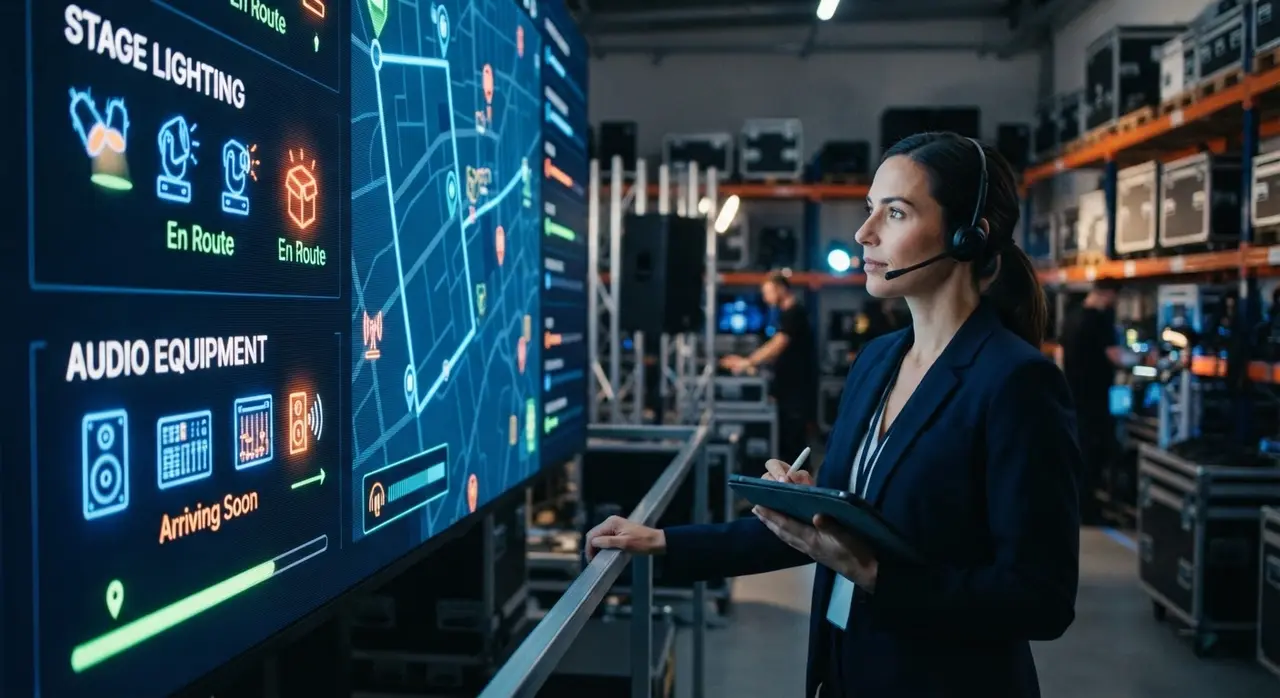
Real-World Impact: Speeding Up Event Logistics
Consider a mid-sized event production company handling corporate trade shows. Before AI, their producers spent roughly 40% of their week just managing the vendor service queue. They were constantly chasing down booth builders, AV technicians, and promotional material printers.
After implementing an AI agent connected via their SGP API, the workflow transformed. The AI began handling the initial outreach and quote organization. It also managed pre-event logistics, sending automated check-ins to all booth builders 24 hours before setup.
The result? The time spent on procurement dropped by 60%. The company could take on 30% more events per quarter without hiring additional administrative staff. Additionally, they saw a massive improvement in AI agents for booth logistics and exhibitor support, as the same technology was adapted to help exhibitors manage their own micro-suppliers.
Steps to Implement AI Supplier Management
If you are a decision-maker ready to bring this technology into your production company, the transition is smoother than you might think. Here are the actionable steps to get started:
- Digitize Your Vendor List: Ensure all your suppliers, their contact info, and their specialties are logged in a central database or CRM.
- Define Your Procurement Rules: Decide on your standard operating procedures. How many quotes do you require per category? What is your standard payment term? The AI needs these rules to operate.
- Choose the Right Integration: Work with an AI provider that can seamlessly connect to your existing ERP or project management tool via an SGP API.
- Start Small: Pilot the AI agent with a specific category first, such as printing services or basic equipment rentals, before rolling it out to complex custom fabrications.
By following these steps, you minimize disruption and allow your team to gradually adapt to their new digital assistant. You can explore more AI use cases in customer service and sales to see how this technology scales across different departments.
Conclusion: Taking Control of Your Production
In the high-stakes world of event production, efficiency is your greatest asset. Relying on manual emails and scattered WhatsApp chats for supplier management is a recipe for missed deadlines and blown budgets.
An AI agent for suppliers transforms procurement from a chaotic chore into a streamlined, predictable process. By automating quote requests, comparing proposals, and tracking delivery milestones, you empower your team to do what they do best: create unforgettable events.
From escaping the endless service queue to enforcing strict delinquency control, AI is the competitive edge modern event agencies need. Embrace the future of intelligent automation and watch your production margins soar.
Frequently Asked Questions
Can the AI agent communicate with vendors on WhatsApp?
Yes. The AI agent can be fully integrated with the official WhatsApp Business API. It can send quote requests, receive PDF proposals, and send automated delivery reminders directly to your vendors' WhatsApp, which is highly effective since most suppliers are constantly on their phones.
Do I need to change my current project management software?
Not necessarily. A well-designed AI agent can integrate with your existing tools using an SGP API or webhooks. It acts as an operational layer on top of your current ERP or CRM, syncing data automatically without requiring you to migrate to a new platform.
How does the AI handle suppliers who don't reply in time?
You can program the AI agent with specific escalation rules. If a vendor doesn't reply within 24 hours, the AI can automatically send a polite follow-up message. If they still don't respond, the system can flag the vendor in your dashboard and automatically reach out to the next alternate supplier on your list.
Is the AI capable of negotiating better prices?
While AI agents are excellent at comparing quotes and identifying the most cost-effective option, complex human negotiation is still best left to your senior producers. However, the AI can be programmed to send a standard counter-offer message, such as asking for a 10% volume discount, before escalating the final negotiation to a human.