
Intelligent Automation for Post-Travel AI Agents
Discover how a post-travel AI agent uses intelligent automation and AI CRM to run satisfaction surveys and seamlessly book your clients' next dream vacation.
- Travel Agency AI
- Intelligent Automation
- AI CRM
- Task Automation
- Customer Retention

A post-travel AI agent uses intelligent automation to proactively contact clients immediately after their trip, conduct personalized satisfaction surveys, and strategically suggest their next destination. This seamless follow-up relies on an AI CRM to analyze feedback, ensuring every returning traveler feels valued while generating immediate repeat business opportunities without manual effort.
For travel agency owners and managers, the end of a client's trip shouldn't mean the end of the relationship. In fact, the post-travel window is the most critical time to build loyalty. When a client returns relaxed and happy, their mind is often already wandering to their next getaway. By utilizing smart technology, agencies can capitalize on this post-vacation glow.
Many mid-sized agencies struggle with follow-ups because human agents are busy closing new deals. This is where task automation steps in, transforming a tedious chore into a powerful, automated revenue engine.
The Anatomy of a Post-Travel AI Workflow
A well-structured post-travel AI workflow systematically guides the client from a warm welcome home to a future booking inquiry. By mapping out a frictionless journey, travel agencies can ensure that no returning client ever falls through the cracks.
The standard intelligent follow-up sequence typically includes three core phases:
- The Welcome Home: A friendly, non-intrusive message sent shortly after the client's return flight lands, focusing solely on their safe arrival.
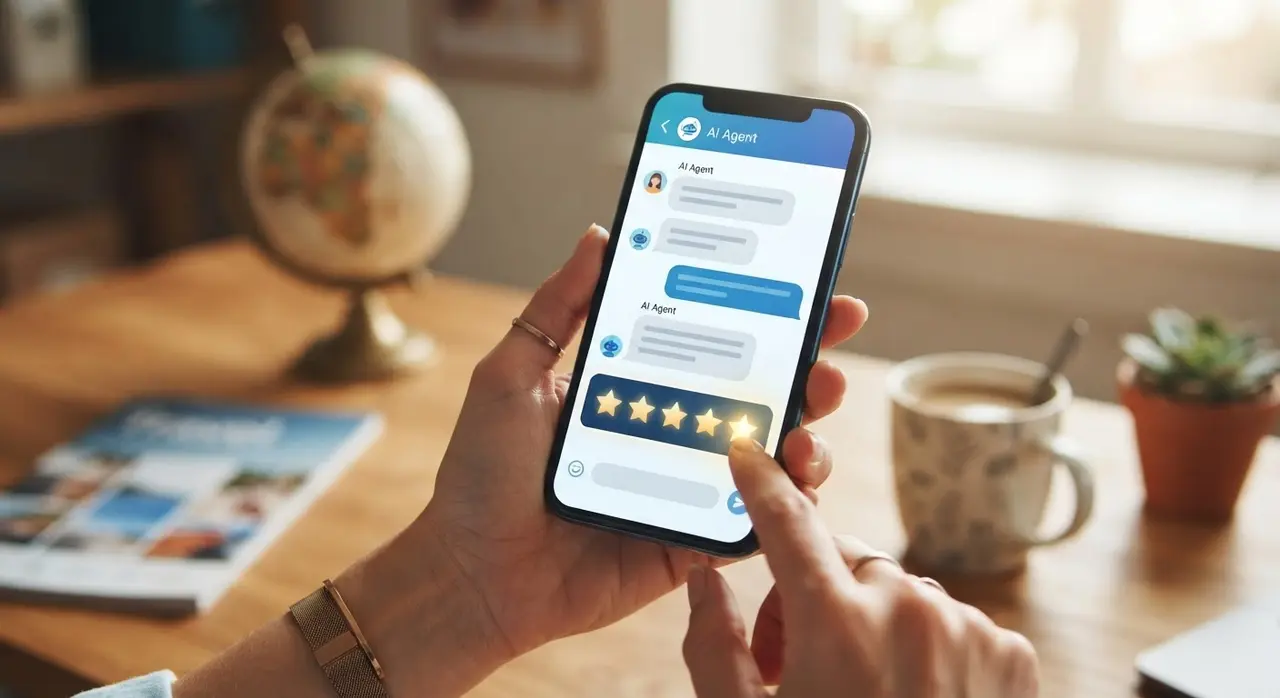
- The Satisfaction Survey: A quick, conversational check-in asking about the hotel, the flights, and the overall experience.
- The Future Seed: A subtle, data-driven suggestion for a future trip based on the positive elements of their recent vacation.
By breaking the interaction down into these steps, the AI avoids sounding like a pushy salesperson. Instead, it acts as a dedicated concierge who genuinely cares about the traveler's experience.
How Task Automation Transforms Feedback into Sales
Task automation converts raw customer feedback into actionable sales data by instantly updating client profiles and alerting agents to high-intent buyers. Instead of leaving valuable survey answers buried in an inbox, the system actively uses them to build comprehensive traveler profiles.
When an agency relies on manual processes, follow-ups are often delayed or forgotten entirely. By shifting to an automated approach, the agency guarantees consistency and speed. Let's look at how the two methods compare:
| Feature | Manual Follow-Up | AI Agent Follow-Up |
|---|---|---|
| Response Time | Days or weeks later, depending on agent workload | Exactly 24 to 48 hours post-trip, every single time |
| Data Entry | Tedious manual notes scattered across spreadsheets | Automatic AI CRM updates with tagged preferences |
| Upsell Timing | Hit or miss, often reliant on the agent's memory | Data-driven triggers based on seasonality and feedback |
| Scalability | Limited by the number of human agents available | Infinite capacity, handling hundreds of clients simultaneously |
This table clearly illustrates why modern travel businesses are rapidly adopting AI. It removes the human bottleneck from post-sales relationship management, allowing human agents to focus entirely on closing complex itineraries.
Setting the Right Triggers and Conversational Tone
Effective AI communication relies on precise timing triggers and a warm, empathetic conversational tone that mimics your best human agent. If an automated message feels robotic or poorly timed, it can damage the client relationship rather than enhance it.
The ideal trigger usually activates 24 to 48 hours after the scheduled return flight. This gives the client enough time to unpack and rest, but catches them while the vacation memories are still fresh. The tone should be celebratory and helpful, using phrases like, "Welcome back! We hope you brought home some amazing memories."
Furthermore, the AI must be capable of dynamic branching. If the client mentions a delayed flight or a poor hotel experience, the AI must immediately pivot to an empathetic, apologetic tone and escalate the issue to a human manager. Empathy is a crucial component of AI use cases in customer service.
Mini-Case Study: Scaling Repeat Bookings with IAChatbot
Implementing a dedicated AI assistant allows mid-sized travel agencies to significantly increase client retention rates and streamline daily operations. A boutique travel agency recently faced a common industry challenge: their agents were too busy booking new trips to follow up properly with returning vacationers.
By integrating a customized post-travel solution from IAChatbot, they completely automated their feedback loop. The AI agent reached out to every single returning client via WhatsApp, collected valuable feedback, and seamlessly updated the agency's central database.
As a result, the agency saw a noticeable surge in repeat clients initiating new bookings directly from the AI's prompts. They freed up countless hours of manual work, proving that strategic task automation directly impacts the bottom line without sacrificing the personal touch.
Integrating an AI CRM to Personalize Future Offers
An AI CRM continuously analyzes post-trip survey responses to automatically match clients with perfectly timed, highly personalized future travel packages. It acts as the brain behind the conversational interface, ensuring that every piece of data serves a future purpose.
For example, if a client states they loved the beach resort but found the 10-hour flight exhausting, the CRM tags their profile with "Prefers Beaches" and "Short-Haul Flights Only." Six months later, when the agency has a promotion for a nearby tropical destination, the AI proactively pitches it to that specific client.

This level of hyper-personalization is the secret to closing more travel packages. It shifts the agency from reactive selling (waiting for the client to call) to proactive, intelligent consulting.
Frequently asked questions
How does a post-travel AI agent know when to contact the client?
The AI agent connects directly to your booking system and uses intelligent automation to trigger a message based on the return flight date. Usually, it is programmed to send a welcome-home text precisely 24 to 48 hours after the client lands, ensuring perfect timing.
Can the AI CRM handle negative feedback during the survey?
Yes, the AI CRM is programmed to detect negative sentiment instantly. If a client reports a bad experience, the AI apologizes gracefully, pauses any automated sales pitches, and alerts a human manager to intervene and resolve the issue immediately.
Will my clients know they are talking to an AI?
While it is best practice to be transparent about using a digital assistant, modern task automation ensures the AI's tone is highly conversational and empathetic. Many clients appreciate the instant, personalized attention regardless of whether it is an AI or a human agent.
How does the AI suggest the next travel destination?
The AI uses the feedback collected during the satisfaction survey, combined with historical booking data stored in the CRM. By analyzing preferences like climate, budget, and travel style, it generates a highly relevant suggestion for their next vacation.