
Smart AI Replenishment: Predicting Seasonal Demand
Discover how an AI inventory agent uses ERP data to forecast seasonal demand, eliminate store stockouts, and streamline purchasing for hardware stores.
- AI Inventory
- Demand Forecasting
- Hardware Store Automation
- ERP Integration
- Retail AI
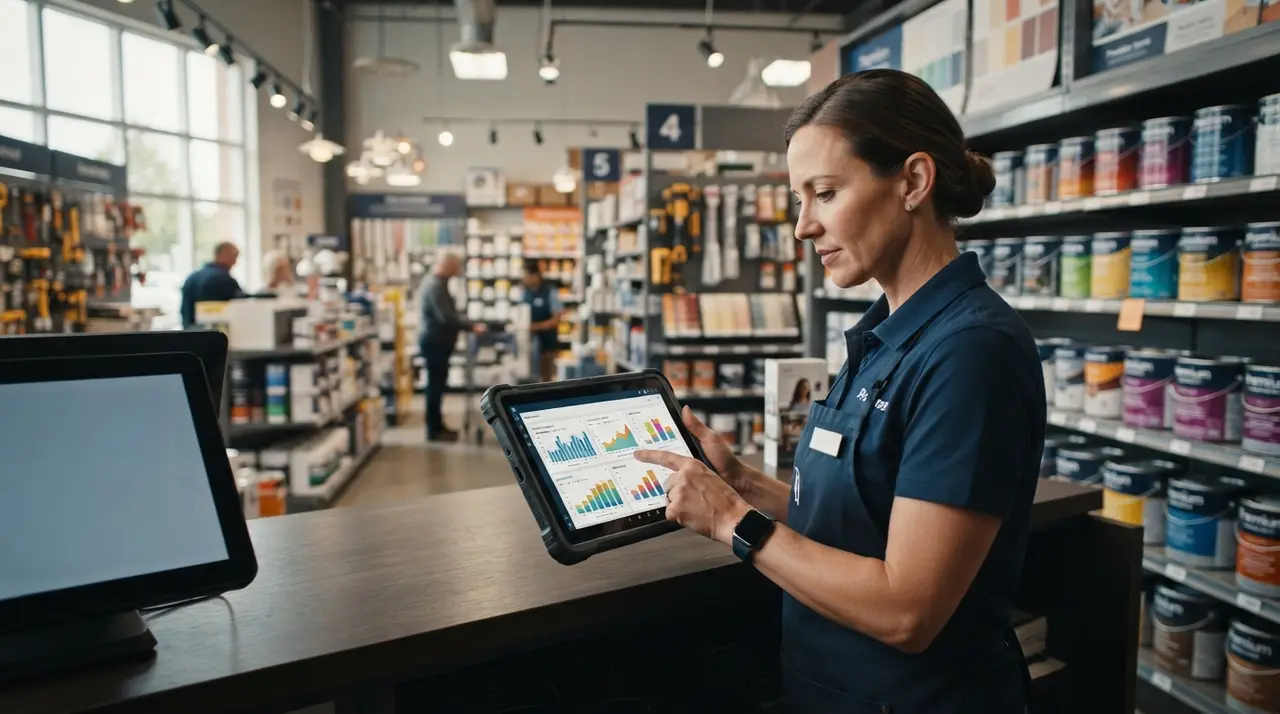
An AI replenishment agent predicts seasonal demand by analyzing historical ERP sales data to forecast purchasing needs automatically. Hardware and paint retailers use intelligent inventory forecasting to prevent costly stockouts during peak renovation seasons while keeping capital free from excess stock. Integrating smart forecasting allows independent stores to compete directly with large home improvement chains.
For independent retailers, inventory management is a delicate balancing act. Stocking up too late on exterior paint before the dry season leads to lost sales and frustrated contractors. Conversely, over-ordering specialized tools leaves valuable working capital tied up in slow-moving warehouse items.
Understanding Seasonal Demand Drivers in Building Supplies
Seasonal sales patterns in building materials follow predictable cycles driven by weather, holidays, and regional construction trends. Exterior paints and waterproofing products spike in dry summer months, while interior coatings and minor repair materials surge right before major end-of-year holidays. Recognizing these micro-trends allows store owners to prepare purchase orders weeks before the demand surge occurs.
Traditional retail management relies heavily on store managers' memory or static spreadsheet formulas. However, manual tracking often fails when weather patterns shift unexpectedly or supplier lead times fluctuate. Implementing modern AI automation solutions bridges this gap by continuously evaluating multi-year historical sales against real-time consumption rates.
Integrating ERP Data with Predictive Purchasing Logic
Predictive AI agents connect directly to your store's ERP system to extract sales history, supplier lead times, and current stock levels. By processing transaction logs across previous years, the agent isolates baseline product velocity from seasonal spikes. It calculates exact reorder points based on projected demand surges rather than simple historical averages.
Once the system identifies an upcoming peak, it automatically generates optimized purchase recommendations. Instead of manually reviewing hundreds of SKUs, purchasing managers receive clear alerts highlighting which items need restocking and the exact recommended quantities. Store operators exploring hardware store AI adoption can reduce routine replenishment planning from days to just a few minutes.

Manual vs. AI-Driven Inventory Replenishment
Transitioning from manual inventory planning to automated AI demand forecasting dramatically alters retail profitability. The table below outlines key operational differences between traditional ordering habits and predictive AI purchasing strategies.
| Operational Aspect | Traditional Manual Method | Predictive AI Replenishment Agent |
|---|---|---|
| Demand Forecasting | Based on last month's sales and manager intuition | Multi-year seasonal data analysis and trend projection |
| Stockout Risk | High during sudden demand surges or supplier delays | Minimized via automated lead time safety calculations |
| Working Capital Efficiency | Low, due to safety stock overbuilding on slow items | High, optimizing stock quantities strictly when needed |
| Reorder Execution | Manual SKU counting and manual purchase orders | Automated reorder suggestions sent to ERP or purchasing teams |
| Customer Experience | Inconsistent availability of high-demand items | Consistent product availability during peak seasons |
Balancing Capital: Avoiding Stockouts Without Overstocking
Unsold inventory acts as frozen cash sitting on warehouse shelves. When store owners over-order seasonal items like masonry sealant or specialized primers, that tied-up capital prevents them from acquiring fast-moving daily hardware supplies. Intelligent replenishment agents calculate dynamic safety stock levels for every individual SKU to maintain ideal liquidity.
By monitoring actual daily depletion rates against supplier delivery calendars, the AI adjusts reorder triggers dynamically. If a paint manufacturer extends lead times from 5 days to 12 days, the AI agent immediately updates reorder alerts to prevent shelf depletion. Discovering real-world AI use cases demonstrates how retail businesses maintain lean inventories without missing sales opportunities.
Case Study: Optimizing Paint Store Stock with IAChatbot
A regional paint and building supply retailer with three stores suffered recurring stockouts of exterior acrylic paint during peak spring renovation months. Concurrently, their warehouses held over $40,000 in excess winter sealing products due to over-purchasing during off-season promotions.
By deploying a customized smart replenishment agent from IAChatbot integrated into their central ERP system, the business automated seasonal demand forecasting. The agent began scanning historical sales data to issue predictive purchase triggers three weeks ahead of historical demand spikes. Within six months, the retailer reduced inventory carrying costs by 22% while completely eliminating spring stockouts on top-selling paint lines.
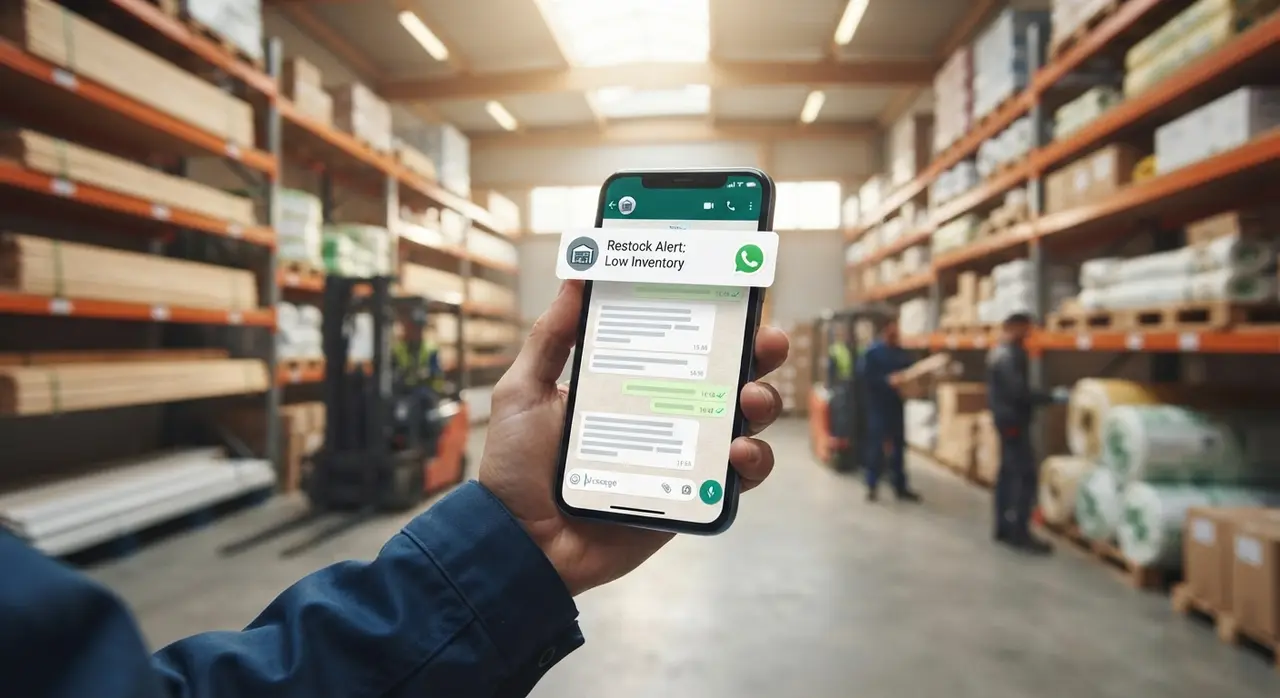
Bridging Inventory Intelligence with Automated Customer Communication
Smart inventory management works best when integrated directly into front-line sales processes. By deploying a specialized customer service bot (bot de atendimento) linked to your inventory database, stock availability can be verified instantly during customer inquiries. When store owners build a chatbot (criar chatbot) tailored for customer communication, they bridge the gap between back-office stock alerts and real-time client purchasing.
Furthermore, when seasonal shipments arrive at the warehouse, an automated message dispatch (disparo de mensagem) can notify trade contractors and retail buyers who previously inquired about out-of-stock products. This end-to-end integration ensures that incoming seasonal stock turns over quickly, maximizing revenue and improving customer loyalty.
Frequently asked questions
What is an AI replenishment agent?
An AI replenishment agent is an automated software system that connects to your store's ERP to analyze historical sales trends, predict future demand, and automatically suggest optimal purchase orders. It helps retailers prevent stockouts and avoid over-purchasing inventory.
How does an AI agent predict seasonal demand spikes?
The AI agent analyzes multi-year historical sales data, identifying recurring monthly, seasonal, or weather-related buying patterns for specific SKU categories. It factors in supplier lead times and current stock levels to issue proactive reorder recommendations before demand surges occur.
Can an AI inventory system integrate with existing ERP software?
Yes, modern AI replenishment agents integrate seamlessly with existing retail ERP and POS software via standard API connections. This enables real-time data synchronization for stock levels, purchase orders, and sales tracking without replacing your core store management software.
How does automated purchasing improve store cash flow?
Automated purchasing prevents store owners from tying up working capital in slow-moving or off-season products by calculating exact inventory needs based on active demand forecasts. Money saved from excess stock can be reinvested into high-margin, fast-selling merchandise.