
Omie WhatsApp & AI: Upgrade Your Factory ERP
Learn how to add an AI layer to your factory ERP without switching systems. Discover data mapping, Omie WhatsApp integration, and automated service strategies.
- ERP Integration
- Factory Automation
- Conversational AI
- WhatsApp Business
- Manufacturing Tech
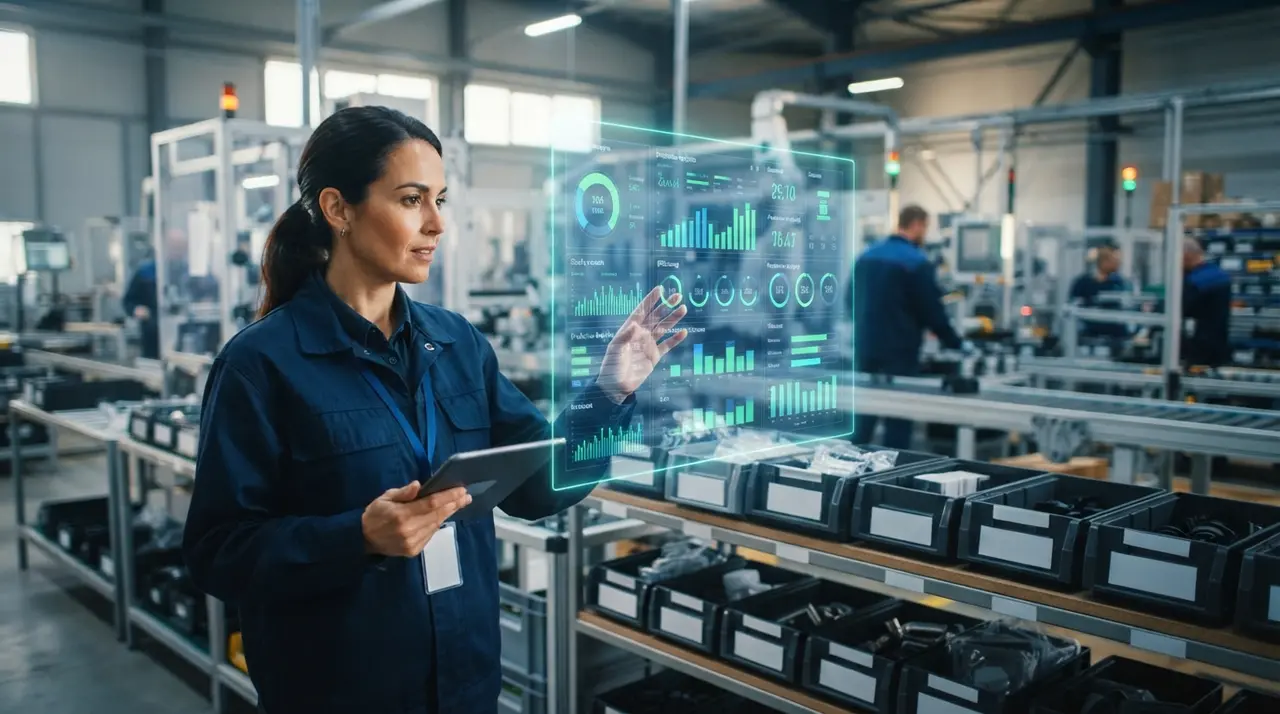
Adding AI on top of your ERP without changing the factory's system means deploying an intelligent middleware layer that reads and writes data via APIs while keeping your current software intact. This approach allows custom goods manufacturers to implement the ia mais usadas no brasil (most used AI in Brazil) for immediate operational upgrades without the downtime of a full system migration. By simply connecting your existing database to modern conversational interfaces, you can transform how your commercial and production teams interact with essential data.
For small and medium-sized factories producing personalized gifts and promotional items, agility is everything. Replacing an Enterprise Resource Planning (ERP) system is notoriously expensive, risky, and time-consuming. Fortunately, you do not have to rip and replace your core infrastructure to enjoy the benefits of artificial intelligence.
Instead, you can build a bridge. This bridge allows an AI agent to consult inventory, generate quotes, and update order statuses in real time. Let us explore the architecture, the incremental implementation steps, and the concrete use cases that make this modernization strategy so effective.
An AI Layer Connects Your ERP to Smart Interfaces
An AI layer connects your legacy ERP to smart interfaces by using API endpoints to fetch and update records in real time. Think of this layer as a highly efficient digital assistant that sits between your factory's database and your customer-facing channels. It translates human requests into database queries and turns database outputs into natural conversation.
The architecture relies on three main components:
- The Legacy ERP: Your single source of truth for inventory, pricing, and production schedules.
- The Middleware: An integration platform (like n8n or Make) that handles the API calls and webhooks safely.
- The AI Agent: The language model that understands the user's intent, processes the context, and formulates the final answer.
When a client asks about a custom order, the AI does not guess. It triggers a workflow in the middleware, which securely queries the ERP. Once the data is retrieved, the AI formats it into a friendly message. This read-and-write capability is what makes AI in Manufacturing so powerful without requiring a system overhaul.
Automated WhatsApp Service Accelerates Custom Quotes
Implementing an atendimento automatizado whatsapp (automated WhatsApp service) accelerates custom quotes by allowing AI to instantly pull pricing and inventory data directly from your system. In custom manufacturing, quoting is often a bottleneck. Sales reps must calculate costs based on material, color, printing technique, and volume.
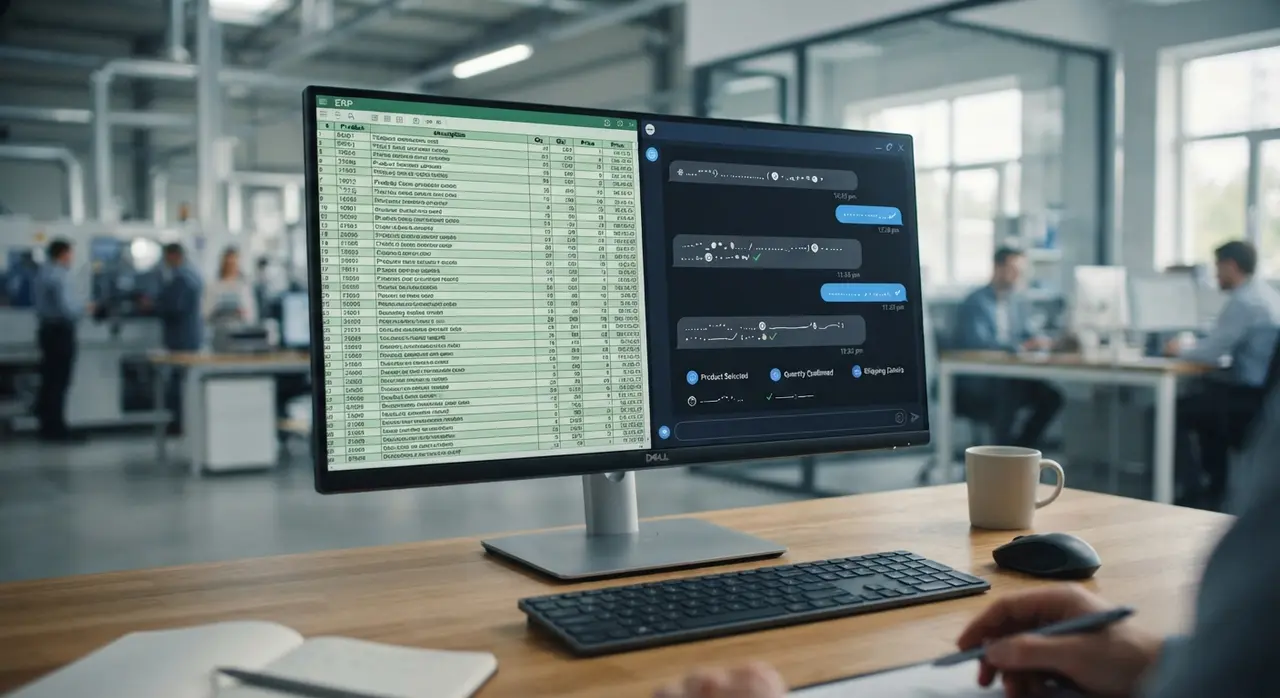
With an AI layer, the quoting process becomes frictionless. A client sends a message on WhatsApp requesting a quote for 500 personalized mugs. The AI instantly asks clarifying questions regarding the logo colors and deadline. Once the variables are collected, it queries the ERP for current raw material costs and production capacity.
Within seconds, the client receives a precise, personalized quote. If the client approves, the AI can write the new order directly back into the ERP, creating a seamless loop. This reduces the sales cycle from days to minutes, freeing your commercial team to focus on complex negotiations.
An Incremental AI Rollout Minimizes Factory Downtime
An incremental AI rollout minimizes factory downtime by focusing on one specific workflow at a time before expanding to other departments. You do not need to automate the entire factory on day one. In fact, attempting to do so often leads to chaotic data mapping and frustrated employees.
The safest strategy is to start with high-volume, low-complexity tasks. Order status inquiries are the perfect candidate. Customers constantly want to know if their promotional items are in the printing phase or out for delivery. By routing these simple queries to an AI that reads your ERP's tracking module, you instantly reduce the burden on your support team.
| Criteria | Traditional ERP Replacement | AI Layer Integration |
|---|---|---|
| Implementation Time | 6 to 18 months | 2 to 6 weeks |
| Operational Downtime | High risk of production stops | Zero downtime (runs in parallel) |
| Staff Training | Extensive retraining required | Minimal (users interact via chat) |
| Upfront Costs | High capital expenditure | Low to moderate subscription/setup |
Once the order status workflow is stable, you can move to phase two: lead qualification and automated quoting. Finally, phase three can involve internal operations, such as allowing production managers to check raw material stock via a quick chat command. This step-by-step approach ensures quick wins and builds team confidence.
Integrating Systems Like Omie WhatsApp Streamlines Orders
Integrating your current software with tools like omie whatsapp streamlines order management directly through messaging apps. Many Brazilian factories rely on robust national ERPs to handle their complex tax and inventory requirements. The challenge has always been making these rigid systems talk to dynamic customer channels.
By leveraging AI solutions from IAChatbot, factories can bridge this gap. The AI acts as a smart interpreter. When a client approves a mockup via WhatsApp, the AI captures that approval and triggers an API call. The ERP then automatically updates the order status from "Pending Approval" to "In Production".
Mini-Case Study: Scaling Promotional Gifts Production
Consider the case of a mid-sized promotional gifts factory struggling with delayed client responses. Their sales team spent hours manually typing data from WhatsApp into their legacy ERP. By partnering with IAChatbot, they deployed an intelligent layer over their existing system.
The result was transformative. The AI handled 70% of routine inquiries and automatically logged new leads into the ERP. The commercial team saw a drastic reduction in manual data entry, allowing them to close 35% more deals per month. Most importantly, the factory achieved this without changing a single line of code in their core management software.
Strategic Data Mapping Prevents AI Hallucinations
Strategic data mapping prevents AI hallucinations by strictly defining which ERP fields the artificial intelligence is allowed to read and present to the user. An AI is only as smart as the data it accesses. If your database is messy, the AI's responses will be inaccurate.
Before connecting the systems, you must audit your data. Ensure that product SKUs, pricing tiers, and lead times are clearly structured. The middleware should be programmed to fetch only specific endpoints. For example, the AI should have access to "Available Stock" but absolutely no access to "Supplier Cost" when chatting with a retail customer.
Furthermore, setting up fallback protocols is crucial. If the ERP server is temporarily down or an API call fails, the AI should be trained to gracefully inform the customer and route the conversation to a human agent. Exploring AI use cases in customer service and sales shows that transparency builds trust.
Frequently asked questions
Can I use AI if my factory's ERP is old or custom-built?
Yes, you can use AI with older ERPs as long as the system has a way to export data, such as a basic API, webhooks, or even direct database queries. Middleware platforms can translate older data formats into modern JSON payloads that the AI can easily read and process.
Is it safe to let AI write data into my factory's financial system?
It is perfectly safe when properly configured using strict permissions and validation rules. The AI does not have direct, unrestricted access to the database; it sends a structured request to the middleware, which then validates the data before updating the ERP.
How long does it take to implement an AI layer over an existing ERP?
Implementing a basic AI layer for a specific use case, like order status checks, typically takes between two to four weeks. More complex workflows, such as dynamic custom quoting with multiple variables, may take six to eight weeks to fully map, test, and deploy.
Will my production team need to learn new software?
No, your production team will not need to learn new software because the core ERP remains exactly the same. In fact, their workflow might become easier, as they can interact with the system using natural language via WhatsApp or internal chat tools instead of navigating complex menus.