
How to Reduce Cost Per Order in Your Custom Products Factory with AI
Stop wasting money on manual processes. Learn how to slash your cost per order in custom product manufacturing using AI and smart Bling integration.
- custom products
- manufacturing automation
- bling integration
- AI for business
- production efficiency
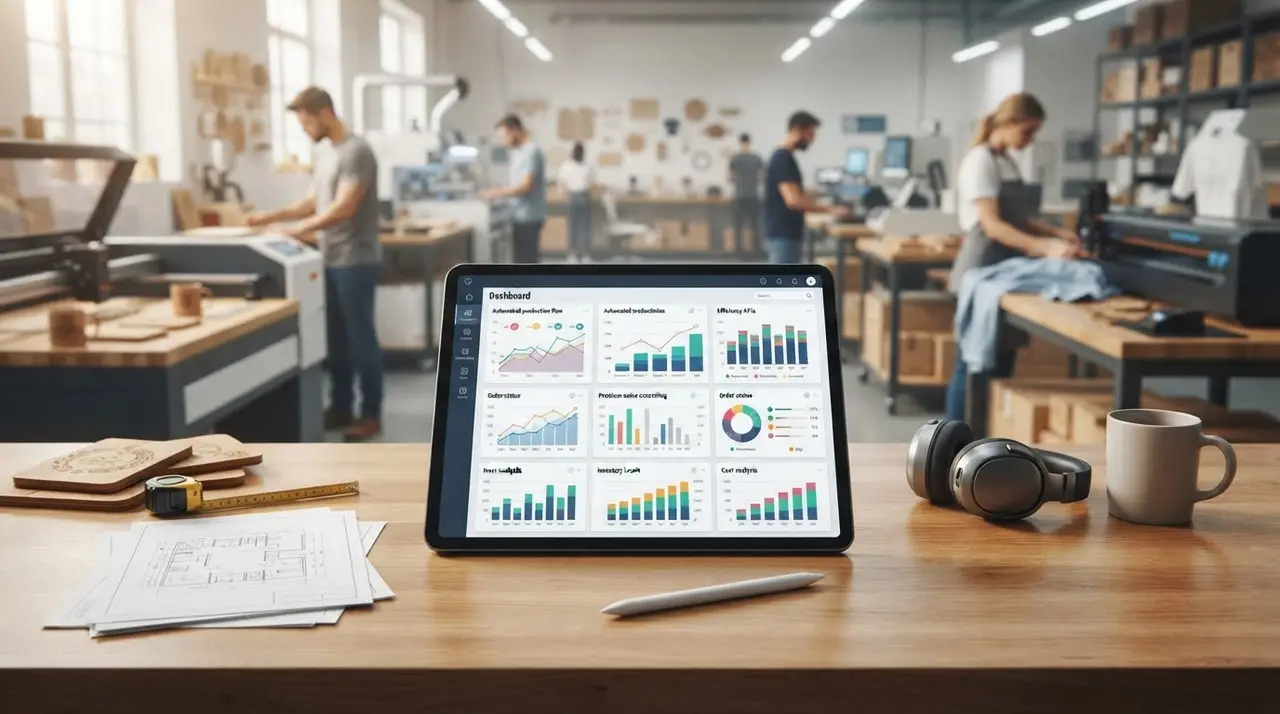
The Hidden Profit Killers in Your Factory
In the world of artigos personalizados, margins are often razor-thin. When you analyze your operation, you might find that your biggest expense isn't raw materials or energy—it's the time and labor spent on repetitive, manual tasks.
From the moment a customer requests a quote to the final dispatch, every touchpoint is a potential drain on your profit. If your team is manually handling repetitive messages, retyping data into an ERP, or fixing artwork errors caused by miscommunication, you are leaking money.
The solution isn't hiring more people; it's optimizing your workflow. By leveraging AI, you can transform your shop floor into a lean, automated powerhouse.
The Anatomy of Your Cost Per Order
To reduce your costs, you first need to measure them. Every order typically incurs costs in four main areas:
- Quoting time: Hours spent checking availability and pricing.
- Administrative friction: Manual data entry and client follow-ups.
- Artwork rework: The hidden cost of layout errors and back-and-forth emails.
- Specification errors: Mistakes in production details that lead to product waste.
Most small to medium factories lose 20% to 30% of their potential profit just in the pre-production phase. By implementing an AI Briefing Agent, you can automate these specifications and dramatically reduce lead times.
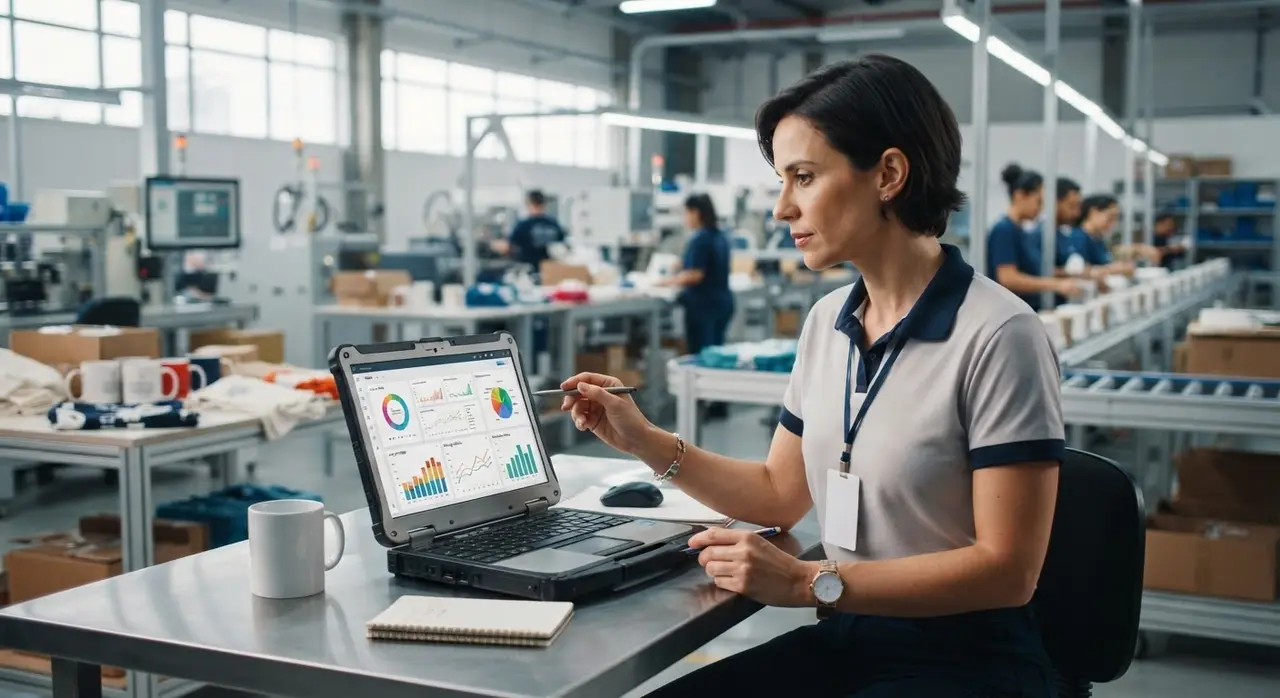
How AI Changes the Math
Imagine a scenario where your team spends 15 minutes per order on manual intake. If you process 100 orders a month, that is 25 hours spent on data entry alone. With AI, that time can drop to seconds.
| Cost Factor | Manual Process (Time) | AI Automated Process (Time) |
|---|---|---|
| Quoting | 10 min | 30 sec |
| Briefing/Specs | 15 min | 1 min |
| Layout Validation | 20 min | 2 min |
| Total | 45 min | 3.5 min |
As shown above, the efficiency gain is massive. This isn't just about speed; it's about the ability to scale your production without increasing your headcount. Furthermore, integrating your system with your ERP—such as a bling integração—ensures that every piece of information flows automatically from the first chat to the final invoice.
The Role of Integration in Production
Automation only works if it talks to the rest of your business. If your chatbot collects an order but your production software doesn't know about it, you have a bottleneck. This is why a solid integração bling is non-negotiable for modern factories.
When your AI agent validates an order, it should instantly push that data into your management system. This eliminates the 'human element' of typos and missed deadlines. For more examples of how this looks in practice, check our case studies.
Validating Layouts Before Production
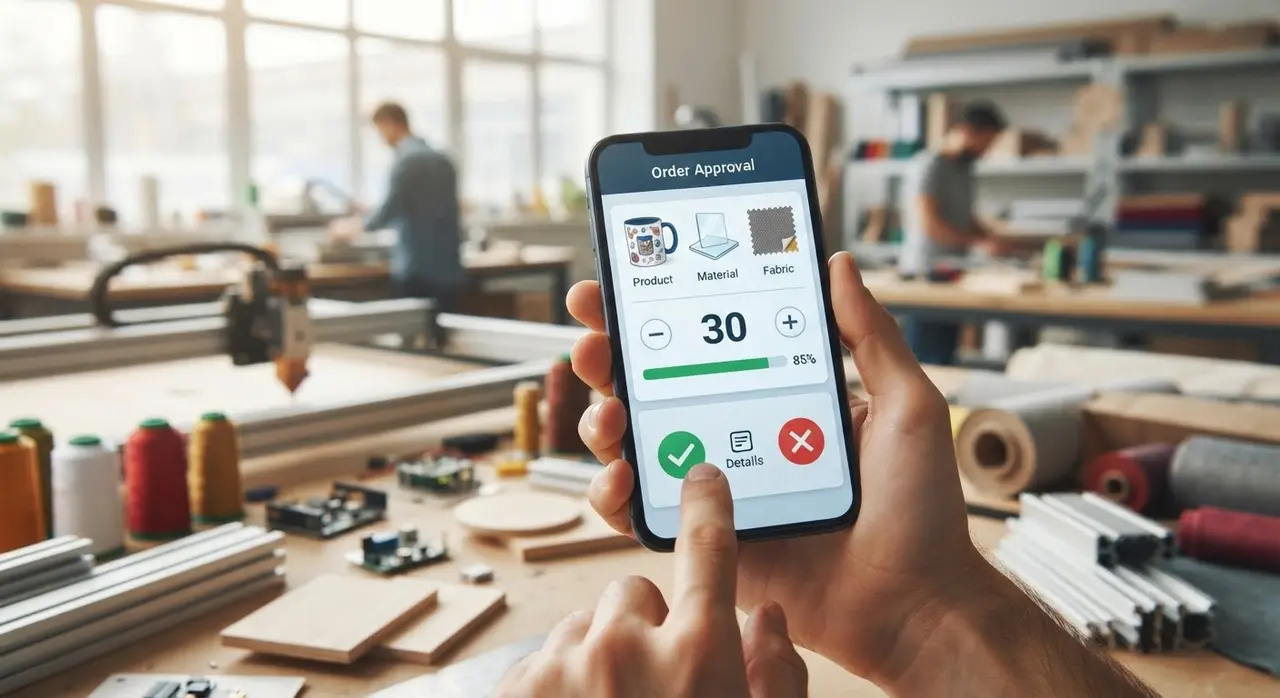
One of the most expensive errors in custom manufacturing is producing an item with the wrong artwork. AI can now act as a gatekeeper, performing an AI Art Approval Agent function to ensure the client has verified the layout before it touches your machines.
By automating the approval loop, you eliminate the "he said, she said" issues that often lead to expensive reprints. You save the material, you save the machine time, and most importantly, you keep your client satisfied with the final result.
Frequently Asked Questions
How does an AI agent integrate with my current ERP?
We use robust API connections to sync our AI agents with tools like Bling. This ensures that every order captured by the chat is automatically registered in your ERP, keeping your inventory and finances perfectly aligned.
Can AI really handle complex custom product specs?
Yes. By using structured briefing flows, the AI asks the right questions at the right time, ensuring that all necessary specifications—size, color, material, quantity—are captured before the order is ever submitted to your production team.
Will my customers feel like they are talking to a robot?
Modern AI agents are designed to be helpful, direct, and efficient. Because they solve problems instantly, customers often prefer the speed of an automated interaction over waiting hours for a human representative to reply.
How long does it take to implement this in my factory?
Depending on the complexity of your workflow, we can have an initial automated flow running in just a few days. We focus on quick wins that show immediate impact on your cost per order.
Is this technology only for large factories?
Not at all. In fact, small and medium factories often see the highest ROI because they lack the massive administrative teams that larger companies have. Automation acts as a force multiplier for smaller teams.