
AI Availability Agent: Real-Time Stock for Hardware Stores
Stop losing sales to slow answers. Discover how an AI availability agent provides real-time stock and delivery times for your building materials store.
- AI automation
- intelligent customer service
- AI company
- hardware store automation
- ERP integration

The Hidden Cost of "Let Me Check the Stock"
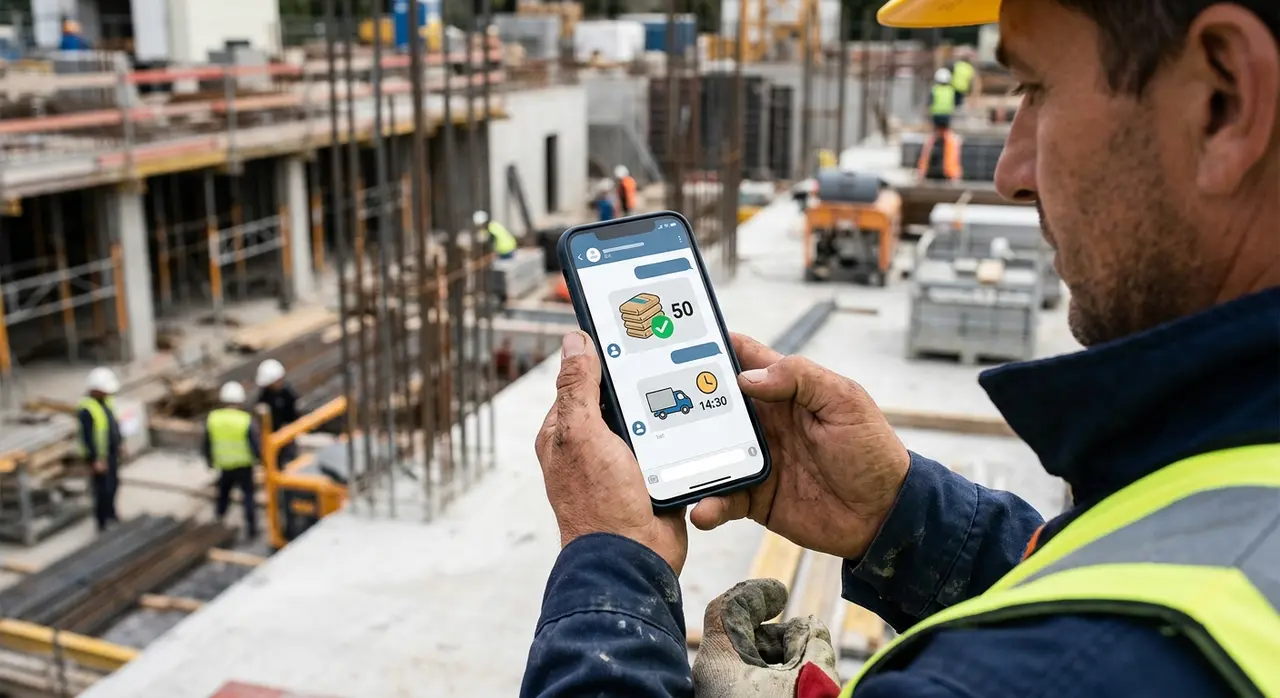
Picture this scenario: a busy contractor messages your store's WhatsApp asking for 50 bags of cement and 15 buckets of a specific matte white paint. They need it delivered to the job site by tomorrow morning.
Your salesperson reads the message and replies: "Hi! Give me just a minute, I'll check our stock."
But the store is packed. The salesperson gets distracted by a walk-in customer, the ERP system takes time to load, and the warehouse manager isn't answering the radio. Thirty minutes later, your salesperson finally replies to the contractor. The response? "Sorry, I already bought it from the store down the street. I was in a hurry."
This is a daily reality for independent paint shops and building material stores. In an industry where time is literally money for your buyers, speed is your biggest competitive advantage. This is exactly where AI automation steps in to transform your sales process.
What is an AI Availability Agent?
An AI availability agent is a virtual assistant powered by artificial intelligence that connects directly to your store's inventory system (ERP). It acts as your fastest, most accurate salesperson.
Instead of relying on human intervention to manually search for items, this agent uses intelligent customer service to understand exactly what the customer is asking for. It instantly queries your database and replies in seconds with precise information.

The agent doesn't just say "we have it." It provides a complete, commercial response: it confirms the item, states the exact quantity available, and calculates the estimated delivery time based on your logistics rules.
By implementing this technology, you completely eliminate the dreaded "let me check if we have it" phase. You stop losing impatient customers and, equally important, you avoid selling products you don't actually have in stock.
How Intelligent Customer Service Changes the Game
When you run a hardware or paint store, you deal with a massive variety of SKUs. A single brand of paint can have hundreds of color bases, finishes, and sizes. Keeping track of this manually is a recipe for errors.
An automated availability agent shines because it handles complexity with ease. Here is how it upgrades your operation:
- Instant Answers: The AI reads the WhatsApp message, identifies the product (even if the customer misspells it, like "Sherwin Willians" instead of "Sherwin-Williams"), and fetches the data in milliseconds.
- Accurate Expectations: It tells the customer exactly when the product will arrive. If it's a special order item, the AI clearly states the lead time, managing expectations perfectly.
- Commercial Tone: The AI doesn't sound like a robot. It uses a helpful, persuasive tone. "Yes, we have 20 buckets of that exact paint in stock! If we close the order now, I can have it delivered to your job site by 2 PM today. Shall we proceed?"
This level of service builds immense trust with contractors and DIY enthusiasts alike. They know that when they message your store, they get reliable answers instantly.
Mini-Case: The Independent Paint Store Transformation
Let's look at a practical example. A medium-sized independent paint store was struggling with inventory mismatch. Salespeople were accidentally promising products that had just been sold by another clerk at the physical counter.
They decided to partner with an AI company to integrate an availability agent into their WhatsApp business account. The setup involved creating specific triggers linked to their local ERP.
Here is what happens now when a painter messages them:
- The Trigger: Customer asks: "Do you have 5 gallons of Suvinil Fosco Completo in stock?"
- The Check: The AI instantly pings the ERP via API. It sees there are 8 gallons left in the physical store.
- The Response: Within 3 seconds, the AI replies: "Hi João! Yes, we currently have 8 gallons of Suvinil Fosco Completo available. We can separate 5 for you right now. Would you like to pick them up, or should we schedule a delivery for this afternoon?"
The result? The store saw a 40% increase in WhatsApp sales conversions simply because they were the first to reply with concrete data. Furthermore, the human team was freed up to handle complex consultative sales, leaving the transactional inquiries to the AI.
Key Benefits of AI Automation for Your Store
Implementing an availability agent goes far beyond just answering messages faster. It creates a ripple effect of efficiency throughout your entire business.
First, it drastically reduces operational rework. When a salesperson sells an out-of-stock item, someone has to call the customer back, apologize, process a refund, or try to push a substitute product. This creates friction and damages your reputation. If you want to dive deeper into how automation prevents these errors, check out our guide on AI solutions for businesses.
- 24/7 Operation: Contractors often plan their next day's work late at night. Your AI agent can confirm stock and take pre-orders at 10 PM, having everything ready for your team when the store opens at 7 AM.
- Cross-Selling Opportunities: If the AI confirms the stock of cement, it can be programmed to naturally ask: "Do you also need sand or waterproofing for this batch?"
- Data-Driven Insights: You can track which products are most requested via chat but frequently out of stock, giving your purchasing department clear signals on what to buy.
By automating the repetitive task of checking inventory, you are essentially upgrading your entire customer experience. It is a powerful way of competing with larger suppliers who have massive call centers.
Integrating the AI Agent with Your ERP
You might be wondering: "My ERP is old and clunky. Can AI really connect to it?" The short answer is yes. Modern AI platforms are highly adaptable.
The integration process usually involves setting up webhooks or API calls between the AI platform and your inventory database. Whenever a customer mentions a product, the AI extracts the "intent" and the "entity" (the product name).
It then translates this into a search query that your ERP understands. If the exact match isn't found, the AI can look for close matches or check alternative brands, just like a seasoned salesperson would.
For example, if a customer asks for a specific brand of PVC pipe that is out of stock, the AI can automatically reply: "We are currently out of Brand X, but we have 100 units of Brand Y in the exact same dimensions, ready for immediate delivery. Would you like to see the pricing?"
Choosing the Right AI Company for the Job
Building a reliable availability agent isn't just about plugging in a generic chatbot. It requires a deep understanding of business workflows and conversational design.
You need to partner with an AI company that understands the nuances of retail. The agent needs to know that a "bag of cement" usually means 50kg, or that paint needs to be tinted before delivery, which adds to the lead time.
Look for specialists who can tailor the AI's tone of voice to match your store's brand. Whether you want the bot to sound highly professional for corporate B2B clients or friendly and colloquial for local DIYers, the right partner will make it happen. To see this in action across different industries, explore our use cases of AI in customer service and sales.
Conclusion
In the competitive world of hardware and building materials, "let me check if we have it" is a phrase that costs you money every single day. Customers demand speed, accuracy, and convenience.
By deploying an AI availability agent, you bridge the gap between your physical inventory and your digital storefront. You empower your business to answer instantly, quote accurately, and deliver on time, every time. It is the ultimate step toward a modernized, highly profitable operation.
Frequently Asked Questions
Does the AI agent work with any ERP system?
In most cases, yes. As long as your ERP system has an API or allows for database querying (even through intermediary automation tools like n8n or Zapier), the AI agent can be integrated to fetch real-time stock and pricing data.
What happens if a product is completely out of stock?
The AI is trained to handle stockouts gracefully. Instead of just saying "no," it can offer similar alternative products, inform the customer when the next shipment is arriving, or ask if they would like to place a backorder.
Will the AI understand my customers' technical jargon?
Yes. The AI can be trained on your specific product catalog and the common slang or abbreviations your customers use. Over time, through intelligent customer service, it learns to perfectly match colloquial requests to your official ERP product names.
Is it difficult for my staff to manage this technology?
Not at all. The goal of AI automation is to reduce your staff's workload. Once set up by a specialized AI company, the system runs automatically in the background. Your human staff only needs to intervene when the AI escalates a highly complex negotiation or a bulk discount request.