
Back Office Agent: Manage Print Queues & Chatbot WhatsApp
Learn how an AI back office agent manages orders, deadlines, and print queues for custom product factories. Discover chatbot whatsapp and n8n integrations.
- Production Automation
- AI Back Office
- Print Queue Management
- Custom Manufacturing
- WhatsApp AI
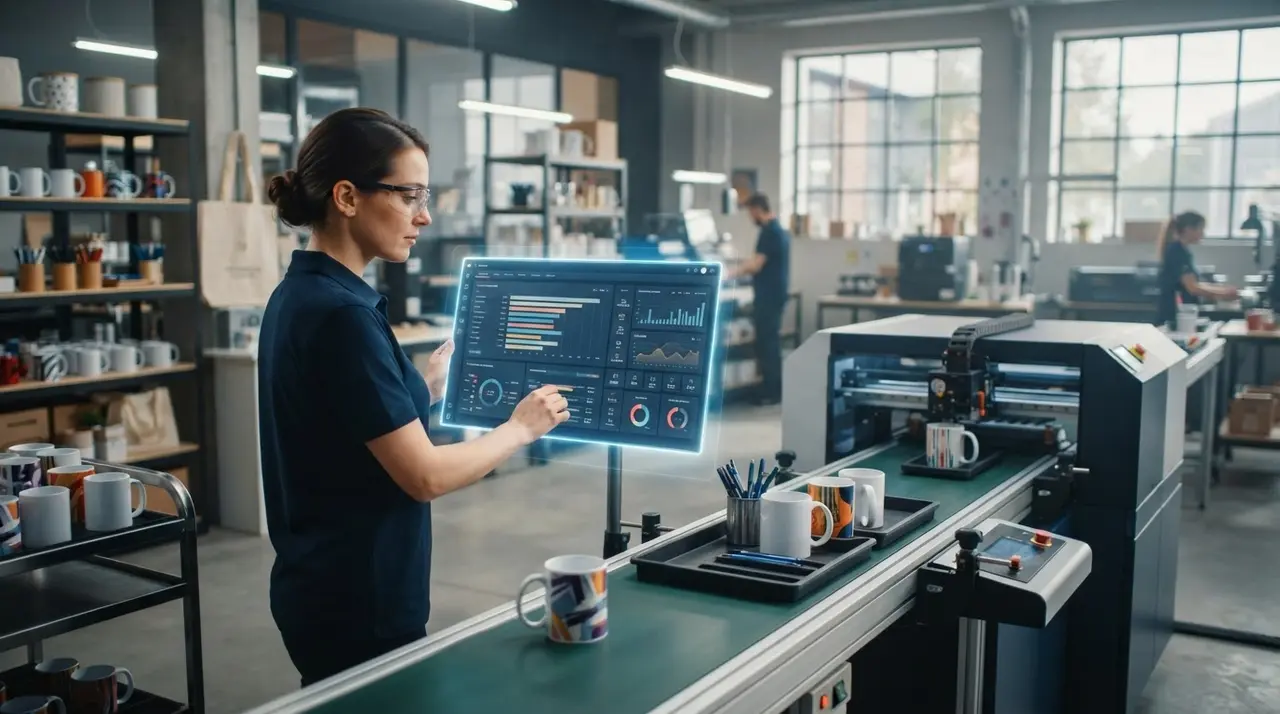
The Chaos of Manual Production in Custom Manufacturing
Running a factory that produces custom promotional gifts is a complex balancing act. Every day, your sales team closes deals for customized mugs, engraved pens, and branded uniforms. But what happens after the sale?
In many small and medium-sized factories, the transition from sales to production is chaotic. Orders are lost in endless email threads, deadlines are miscommunicated, and the factory floor relies on manual spreadsheets. This manual approach creates a massive bottleneck.
When your production manager has to manually organize the daily print queue, errors are inevitable. Rush orders are missed, machines sit idle waiting for artwork approvals, and clients get frustrated. You need a smarter way to manage the flow of information.
This is where an AI back office agent comes in. By integrating your production systems with a smart chatbot whatsapp, you can automate order intake, prioritize queues, and eliminate the manual guesswork from your factory floor.
What is an AI Back Office Agent?
An AI back office agent is a digital assistant that works behind the scenes to orchestrate your entire production workflow. It acts as the bridge between your commercial team, your clients, and your factory floor.
Instead of relying on human operators to copy and paste order details, the AI agent automatically registers incoming orders into your ERP or production system. It extracts key data such as product type, quantity, artwork files, and delivery deadlines.
Beyond just logging data, the agent actively manages the workflow. It ensures that the commercial team has collected all necessary assets and can even interact directly with clients to validate layouts before production.
- Instant Registration: Automatically inputs sales data into the production board.
- Deadline Tracking: Monitors delivery dates and adjusts priorities in real-time.
- Automated Communication: Keeps both the sales team and the client updated on the production status.
By delegating these repetitive tasks to AI, your production managers can focus on what they do best: ensuring quality and maximizing machine output.
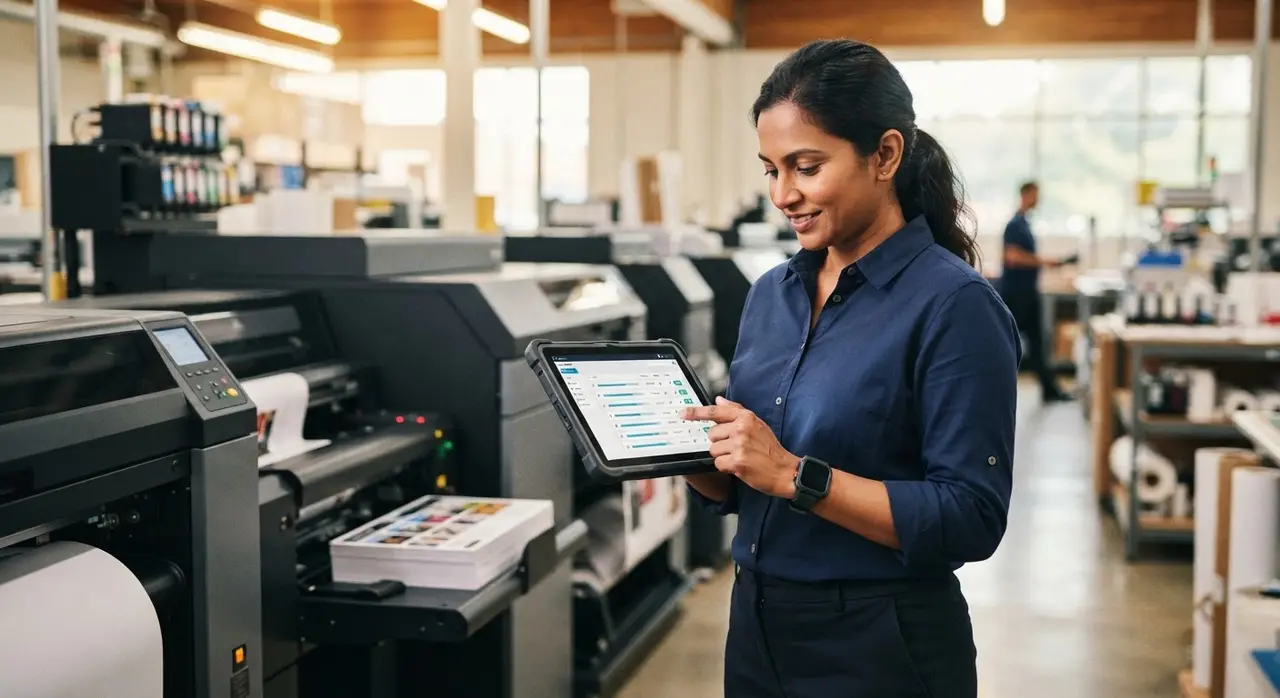
Automating the Print Queue: Logic and Prioritization
One of the biggest challenges in a custom gifts factory is deciding what to print first. Should you prioritize the 500-piece mug order due next week, or the 50-piece laser-engraved pen order due tomorrow?
An AI back office agent removes the emotional and manual guesswork from this process. It uses predefined logic to organize the print queue automatically. The agent evaluates multiple data sources simultaneously to determine the optimal production sequence.
Data Sources for Smart Prioritization
To make intelligent decisions, the AI agent pulls data from various touchpoints in your business. It looks at the CRM for client priority, the ERP for inventory levels, and the production software for machine availability.
The logic typically weighs three main factors:
- Delivery Deadline: Orders with imminent delivery dates are automatically bumped up the queue.
- Material and Setup Time: The agent groups similar orders together. For example, it will queue all sublimation tasks back-to-back to minimize machine setup time.
- Client VIP Status: High-value clients or premium rush orders are flagged for immediate attention.
This dynamic prioritization ensures that your machines are always running the most critical jobs, drastically reducing delays and boosting overall efficiency.
Connecting the Dots: The Tech Behind the Agent
You might be wondering how all these systems communicate seamlessly. The secret lies in powerful workflow automation platforms. When exploring automation, many factory owners ask, n8n o que é (what is n8n)?
Simply put, n8n is an advanced, node-based automation tool that connects different software applications. It acts as the brain behind your AI back office agent. Through n8n, your WhatsApp API, CRM, ERP, and production dashboards all talk to each other in real-time.
For example, when a client approves an artwork via a chatbot whatsapp, n8n instantly triggers a workflow. It updates the order status in your ERP, moves the task to the "Ready to Print" column on your digital board, and alerts the machine operator.
This interconnected ecosystem ensures that no data is ever lost and no step is forgotten. It creates a seamless, invisible layer of management that keeps your factory running like clockwork.
Spotting Bottlenecks Before They Happen
Even with a perfectly organized queue, production issues can arise. A machine might break down, or a specific raw material might run out. A manual back office usually discovers these bottlenecks when it is already too late.
An AI back office agent is proactive. It constantly monitors the pace of production against the required deadlines. If the agent notices that the sublimation printer is clearing orders slower than expected, it immediately flags the bottleneck.
- Real-Time Alerts: Sends automated notifications to the production manager's phone or dashboard.
- Queue Rebalancing: Automatically reroutes compatible orders to backup machines if available.
- Sales Team Updates: Warns the commercial team of potential delays so they can manage client expectations proactively.
By catching these issues early, you prevent a single machine failure from derailing your entire weekly production schedule.
Comparing Workflows: Manual vs. AI Agent
To truly understand the impact of an AI back office agent, let's look at a direct comparison of daily factory operations.
| Process | Manual Back Office | AI Back Office Agent |
|---|---|---|
| Order Logging | Manual data entry from emails/WhatsApp to ERP. High risk of typos. | Instant, error-free sync from CRM/WhatsApp directly to the production board. |
| Queue Sorting | Manager spends hours daily sorting spreadsheets by date and material. | AI dynamically sorts and groups orders by deadline and setup requirements in seconds. |
| Bottleneck Detection | Discovered only when an order misses its deadline. | Proactive alerts sent the moment production speed drops below the required threshold. |
This side-by-side view makes it clear: relying on manual labor for data routing is costing your factory time, money, and client satisfaction. Implementing AI solutions is the fastest way to modernize your operations.
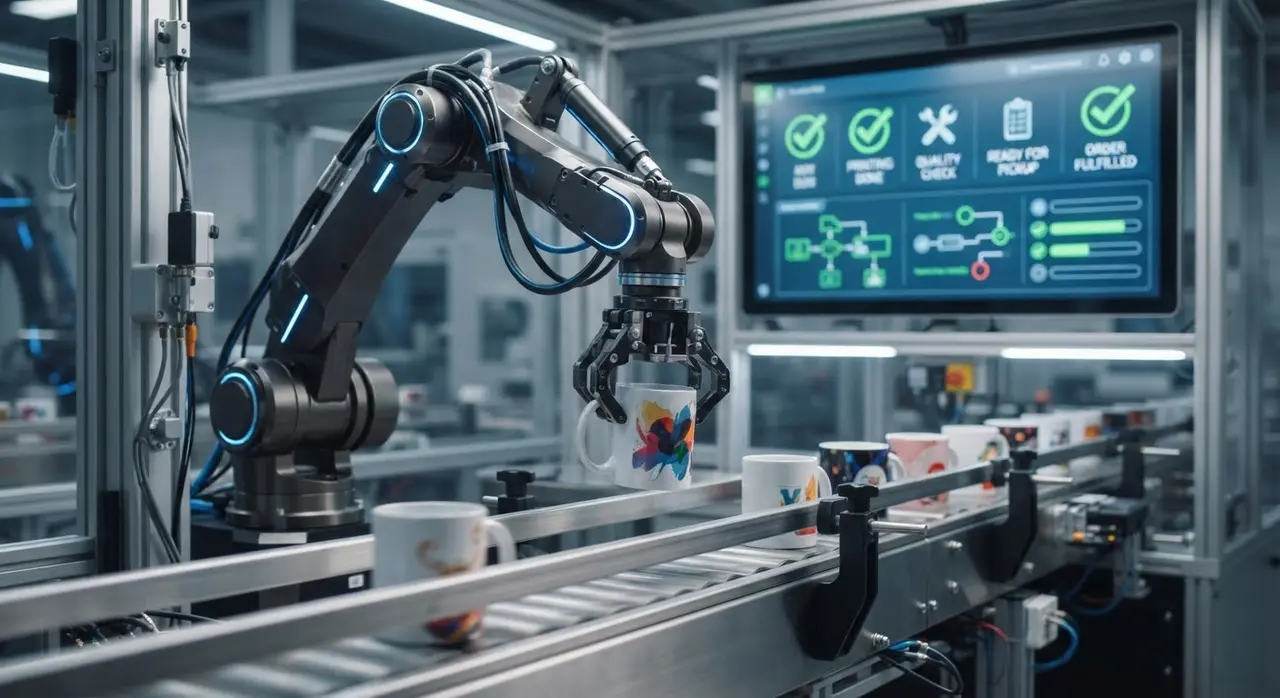
Driving Melhoria Contínua in Your Factory
In manufacturing, standing still means falling behind. You must constantly look for ways to optimize your processes. This concept is known as melhoria contínua (continuous improvement).
An AI back office agent is the ultimate tool for melhoria contínua. Because it tracks every single step of the production journey, it generates a wealth of data. Over time, the agent provides detailed reports on where your factory is losing time.
You will clearly see which product lines cause the most delays, which clients consistently hold up artwork approvals, and which machines require the most maintenance. Armed with this data, you can make informed, strategic decisions to refine your operations.
Instead of guessing how to improve your factory floor, you have hard data guiding your continuous improvement efforts. Every month, your production cycle becomes slightly faster, more cost-effective, and more reliable.
Real-World Application: A Mini-Case Study
Let's look at a practical example. A medium-sized promotional gifts factory was struggling to handle the holiday rush. They were producing thousands of custom t-shirts and corporate kits, but their manual order sorting was causing severe delays.
They implemented an AI back office agent to manage their print queues. The agent was integrated with their existing CRM and a dedicated chatbot whatsapp for client communication. When a corporate client approved a uniform design via WhatsApp, the agent instantly logged the approval.
The AI then categorized the order by fabric type and delivery date, automatically slotting it into the optimal position in the cutting and printing queue. If an urgent order came in, the agent dynamically shifted non-urgent items down the list and alerted the floor manager.
The results were immediate. The factory reduced their average production delay by 40%. They eliminated the need for a full-time employee to just manage spreadsheets, allowing that staff member to focus on quality control. This is a perfect example of how to boost custom products output using smart technology.
How to Implement Your Own Agent
Transitioning to an automated back office might sound intimidating, but it is highly achievable for small and medium factories. The key is to start small and scale up.
First, identify your biggest bottleneck. Is it order registration? Artwork approval? Or queue sorting? Map out this specific process on paper. Understand exactly what data is needed to make a decision at that stage.
Next, choose the right tools. You will need a central automation hub (this is where understanding n8n o que é becomes valuable) to connect your current software. You don't need to rip out your existing ERP; the AI agent works alongside your current systems.
Finally, roll out the automation in phases. Start by automating just the order registration. Once your team is comfortable, introduce the automated queue prioritization. This phased approach ensures a smooth transition and immediate buy-in from your production staff.
Conclusion
The days of managing custom manufacturing orders with manual spreadsheets and chaotic email threads are over. To stay competitive, factories must embrace smart automation.
An AI back office agent provides the perfect solution. By integrating a chatbot whatsapp for seamless communication and utilizing intelligent logic to manage print queues, you eliminate delays and human error.
Through proactive bottleneck detection and a commitment to melhoria contínua, your factory can produce more custom goods, faster, and with higher quality. It is time to let AI handle the heavy lifting of back office management, so you can focus on growing your business.
Frequently Asked Questions
How does the AI agent handle extremely urgent or VIP orders?
The AI agent uses rule-based logic that you define. You can assign specific tags to VIP clients or set strict SLA deadlines in your CRM. When the agent detects these tags, it automatically bypasses standard queue rules and places the urgent order at the top of the production list, while immediately notifying the floor manager.
Can this technology integrate with my factory's current ERP?
Yes. By using advanced API connectors and automation platforms like n8n, the AI back office agent can seamlessly read and write data to almost any modern ERP or CRM system. You do not need to abandon your current software; the AI simply acts as an intelligent layer on top of it.
Do my machine operators need special technical training to use this?
Not at all. The beauty of an AI back office agent is that the complex logic happens behind the scenes. Your machine operators will simply see a clean, prioritized digital board or receive straightforward automated messages detailing exactly what they need to print next.
How does a chatbot whatsapp help with factory production?
A WhatsApp chatbot bridges the gap between the client and the factory floor. It can automatically request artwork approvals, notify clients of production milestones, and instantly update the internal system once a client gives the green light, ensuring machines never sit idle waiting for manual confirmations.