
Generative AI in Customization: Big Gains for SMBs
Discover how small and medium custom manufacturers use generative AI to boost sales, create mockups, and automate replies without huge investments.
- Generative AI
- Custom Manufacturing
- SMB Automation
- Sales Automation
- Business Growth
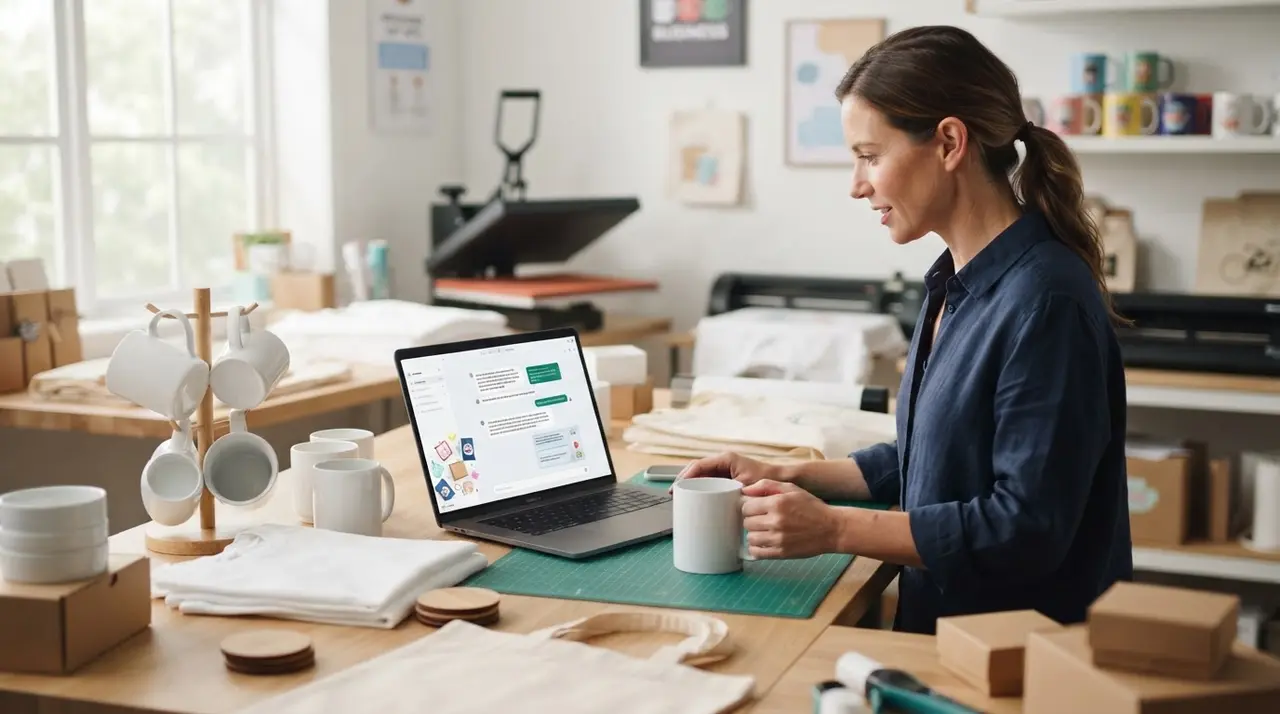
The Generative AI Advantage for Custom Manufacturers
Custom manufacturing is a high-touch, detail-oriented business. You sell unique items, which means every single customer interaction requires personalization. If you run a growing loja virtual de personalizados, you already know the daily struggle of juggling complex quotes, art approvals, and tight production schedules.
For small and medium-sized businesses (SMBs), hiring a massive team to handle these tasks isn't always feasible. This is exactly where generative artificial intelligence steps in. It acts as your tireless digital assistant, handling the heavy lifting of communication and ideation so your team can focus on production.
You don't need a massive tech budget to see immediate results. By strategically deploying AI, you can boost custom products output while dramatically reducing human error. Let's explore the concrete gains your factory can achieve right now.
Concrete Gains: Where AI Shines in Customization
Generative AI isn't just a buzzword; it's a practical tool that solves everyday bottlenecks in the promotional gifts industry. Here is how you can extract real value from it.
Crafting High-Converting Product Descriptions
Writing unique descriptions for hundreds of custom items is exhausting. Generative AI can produce SEO-optimized, engaging product descriptions in seconds. Instead of copying and pasting generic text, you can prompt the AI to highlight specific features.
- Speed: Generate dozens of descriptions in minutes.
- SEO Focus: Automatically include keywords that your buyers are searching for.
- Tone Matching: Keep your brand voice consistent across your entire catalog.
Better descriptions mean higher conversion rates on your website, turning casual browsers into paying B2B clients.
Winning Commercial Proposals in Minutes
When a corporate client asks for a quote on 500 custom notebooks, speed is your best friend. The first vendor to reply with a professional, detailed proposal usually wins the deal. AI tools can take a messy customer email and instantly format it into a persuasive commercial offer.
You simply feed the AI your pricing table and the client's request. It will draft a proposal that highlights your production quality, turnaround times, and bulk discounts. Your sales team just reviews, approves, and hits send.
Instant, Personalized Customer Replies
Customers want immediate answers. "Do you print on stainless steel?" or "What is the minimum order quantity for laser-engraved pens?" Answering these repetitive questions drains your commercial team's energy.
By implementing AI chatbots, you can automate these top-of-funnel interactions. The AI reads the context, checks your business rules, and provides accurate answers 24/7. If the request is complex, it seamlessly transfers the chat to a human agent.
AI Support for Mockup Creation
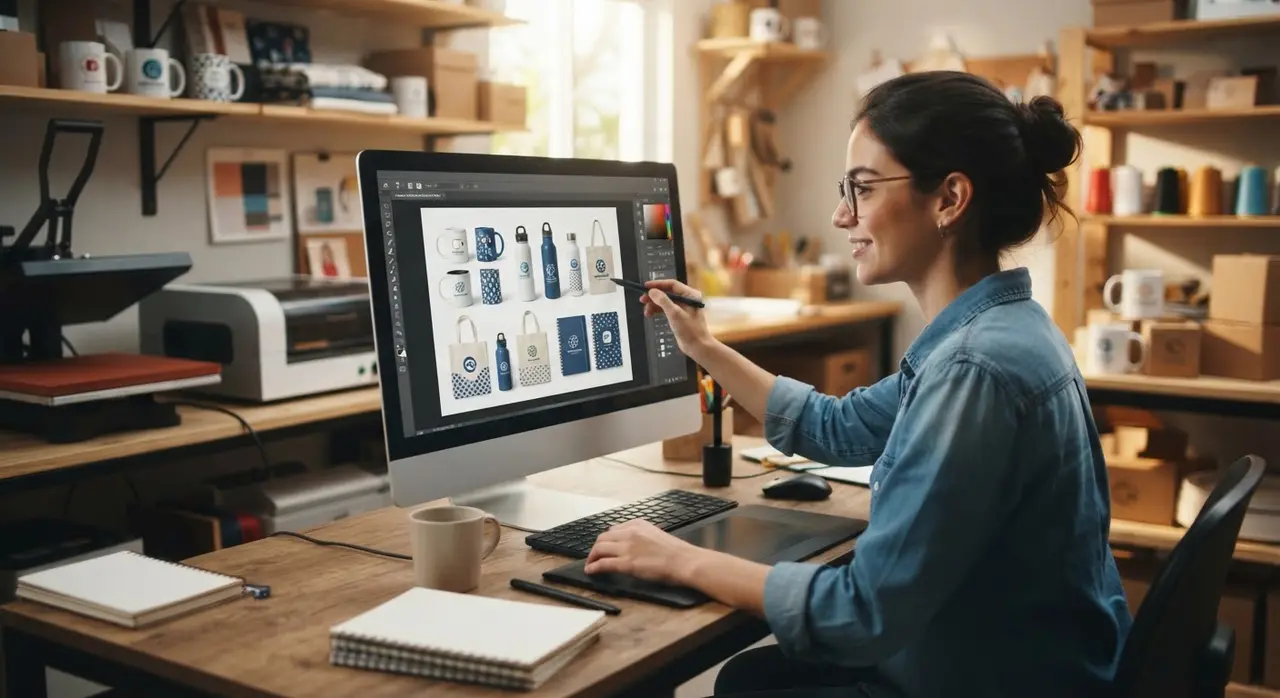
Creating visual proofs is one of the biggest bottlenecks in custom manufacturing. While AI won't replace your professional designers just yet, it offers massive support in the ideation phase.
Generative image AI can help you quickly generate lifestyle backgrounds for your products or create conceptual layouts to show a client the "vibe" of a promotional kit. This helps close the sale faster before your design team spends hours on the final vector files.
Extracting Maximum Value Without Huge Investments
The beauty of modern generative AI is its accessibility. You don't need to build custom software from scratch. However, to get the best return on investment, you must follow a few core principles.
The Golden Rule: Human-in-the-Loop
AI is powerful, but it isn't flawless. The secret to using it safely in a factory setting is the "human-in-the-loop" approach. AI should generate the first draft, but a human must approve the final output.
- Proposals: AI drafts the quote; a salesperson verifies the pricing.
- Mockups: AI generates the concept; a designer finalizes the print-ready file.
- Approvals: Use AI to validate layouts before production, ensuring dimensions match your guidelines before a human gives the final green light.
This hybrid model guarantees speed without compromising the quality your clients expect.
Integrating Back-Office and Production
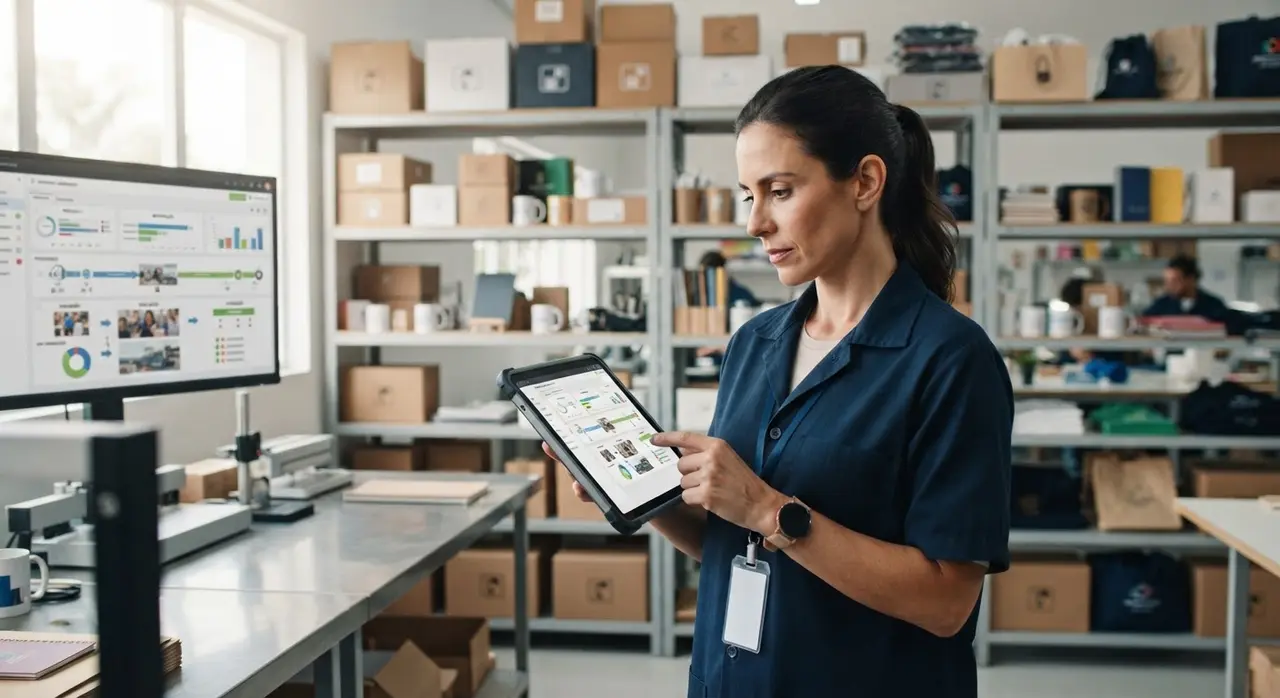
To truly scale, your AI tools need to talk to your inventory and production systems. Many SMBs rely on robust ERP systems to manage their operations. For instance, integrating AI with your ERP allows chatbots to instantly check stock levels for specific blank items.
Many managers are now exploring native AI features within their management software, searching for solutions like Tiny IA and reading tutorials on Tiny como usar to automate their back-office workflows. When your AI knows exactly what is in stock, it can confidently close sales without overselling.
Your Incremental AI Adoption Roadmap
Overhauling your entire operation overnight is a recipe for disaster. Instead, adopt AI incrementally. Here is a prioritized roadmap designed specifically for custom goods manufacturers.
Phase 1: Quoting and Customer Service
Start where the revenue is. Implement an AI agent on your WhatsApp or website to handle initial inquiries and basic quoting. This immediately frees up your sales team to focus on closing high-value corporate deals.
Look into different use cases of AI in customer service to see how other manufacturers are automating their front lines.
Phase 2: Design Support and Mockups
Once your sales are flowing faster, address the design bottleneck. Introduce generative AI tools to your design team. Use them to create quick conceptual mockups for clients who "don't know exactly what they want yet."
Phase 3: Post-Sales and Follow-Ups
The final phase is automating the customer journey after the sale. Set up AI workflows to send automated production updates, shipping tracking, and post-delivery satisfaction surveys.
Conclusion: Start Small, Scale Smart
Generative AI levels the playing field for small and medium custom manufacturers. By automating repetitive tasks like drafting proposals, answering basic questions, and conceptualizing mockups, you empower your team to do what they do best: deliver exceptional custom products.
Remember, the goal isn't to replace your human workforce, but to augment them. Start with a single bottleneck—like WhatsApp customer service—and expand your AI usage as you see the return on investment grow.
Frequently asked questions
Will AI replace my factory's design team?
No. Generative AI is a powerful brainstorming and conceptualization tool. It helps create quick visual drafts to close sales faster, but human designers are still essential for creating precise, print-ready vector files and ensuring production quality.
Do I need a large budget to start using AI?
Not at all. Most AI tools and chatbot platforms operate on affordable, subscription-based models. You can start automating your customer service and quoting processes for a fraction of the cost of hiring a new full-time employee.
Can AI integrate with my current inventory software?
Yes. Modern AI agents can integrate with most standard ERP and inventory management systems via APIs. This allows your AI to check real-time stock levels of blank items before generating a commercial proposal for a client.
How do I prevent the AI from giving wrong prices to clients?
By using a "human-in-the-loop" strategy and providing strict guardrails. You can configure the AI to generate the proposal but require a human salesperson to click "approve" before it is sent to the client. This ensures 100% accuracy while still saving hours of drafting time.